
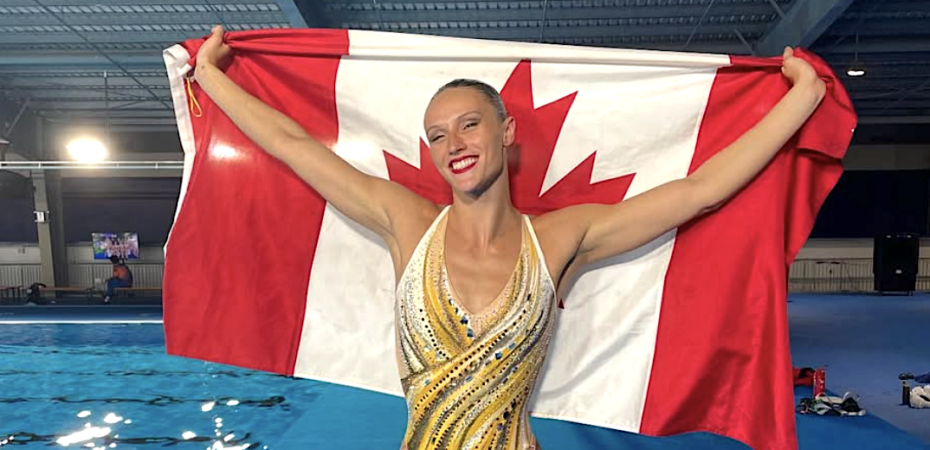
Halle Pratt reached the pinnacle of artistic swimming at the Tokyo Olympic Games, placing sixth with Team Canada on the sport’s biggest stage.
And then, almost immediately, she stepped away completely. So completely that she didn’t set foot in a pool for three years and distanced herself from the sport as much as possible. At the time, she believed her career was over.
Still, in 2025, she found herself back on the World Championships stage. This time, however, her motivation hasn’t been medals or milestones, but rather a renewed love for the sport and a deeper appreciation for the journey itself.
“It’s been really awesome,” Pratt, 26, said of her return. “It was difficult to come back, especially after so much time off. I didn’t swim for three years, I really thought I was done. But I had a change of heart.”
The spark for her comeback came unexpectedly, while watching Canada’s Olympic swimming trials for Paris 2024. Her younger brother Cole, who was also at the Tokyo Games, was competing there. Seeing him overcome injury and return to the pool to do what he loved reignited her own fire and made her realize she had more to give.
“He’s one of the hardest working people I know, so seeing him go back to sport, come back to himself, and really thrive was super motivating. Honestly, just watching all the swimmers in general was super empowering to go back. To see that you can still do it even if you’re a bit older, if you had time away, if it’s not your first Olympics… I kind of decided to slowly come back on my own, just to see if I could still do it.”
She began swimming laps that summer, then gradually returned to artistic swimming training in the fall. By the end of November, she went through national team tryouts, and was selected.
“It means so much more now that I’ve had to work so hard to get back to where I was. Before, I always felt like I was one of the top girls going into trials. I was never stressed about that kind of thing. But this time, it was like, ‘Oh, now I really have everything to prove!’ (laughs).”
However, returning to artistic swimming wasn’t as straightforward as simply picking it up right where she left off. The sport had drastically changed during her absence, requiring her to learn an entirely new system and a different way of moving in the water.
“It was super challenging. There were a lot of tears, a lot of long days. But it being my choice to come back made it a bit easier. It was my idea in the first place, so I approached it as, if I don’t like it, I can just leave. If it’s not for me or if I can’t do it, I know that I’ll be okay. I know that life outside of sport is really wonderful as well, so it made it less stressful.”
As she navigated that transition, Pratt leaned heavily on her teammates, all but one younger than her, and credits them for helping her adapt to the new demands of the sport.
“They opened up to me right away, and they’ve really helped me so much, with the different codes, with tips to do the new techniques and stuff. I’ve had to learn so many more new skills, and it’s a new kind of challenge every day. I feel like there wasn’t always that steep learning curve later on in your career before, so that’s been fun.”
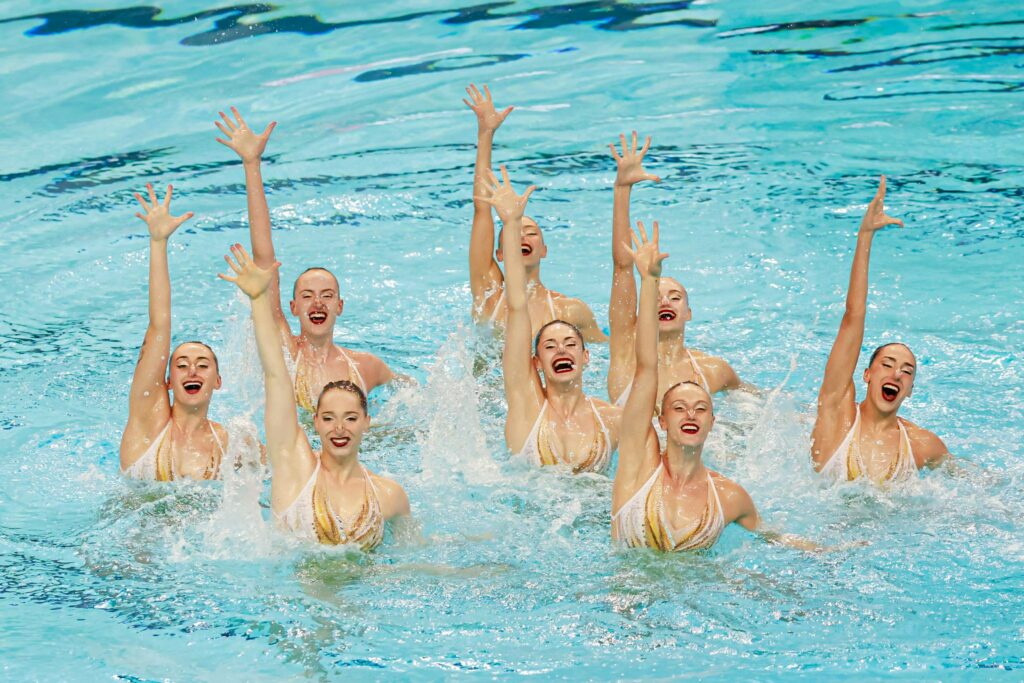
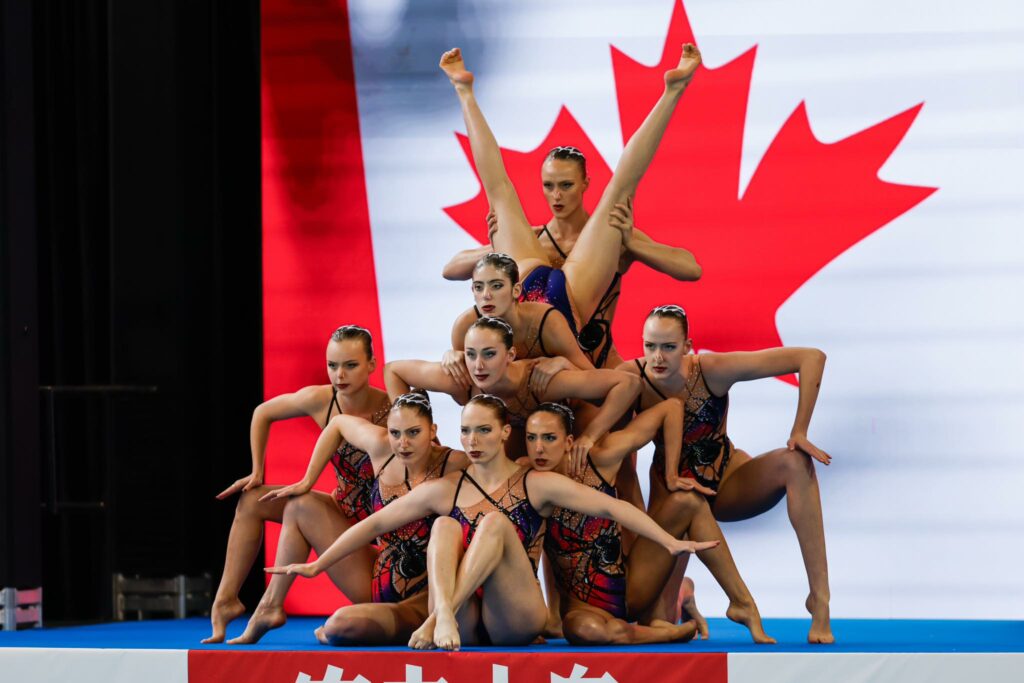
Pratt’s path to elite synchro began almost serendipitously. Unlike her siblings, all of whom were competitive swimmers, young Halle hated swimming laps. She would cry at the starting blocks and find ways to get out of the pool any way possible.
So at age seven, after her family moved to Calgary, her parents decided to let her try artistic swimming. “They signed me up and I never left,” she recalled. Ballet had prepared her for the sport’s demands, and she quickly flourished in the pool.
Even though she ultimately chose a different sport from the rest of her family, the influence of the Pratt household has remained central to her development. Her father Jasen competed in swimming at two Pan American Games and later coached at one, while her younger brother Cole had similar Olympic dreams as her.
“Growing up, all my siblings swam. I have two brothers and a sister, and being in that environment of everyone working hard, training hard, it really pushes you and motivates you, even though I was in a different pool than them.”
Behind the scenes, the Pratt siblings’ ambitions were supported by relentless commitment from her parents. With four children, schedules were often chaotic, sometimes involving practices at multiple pools on the same day. Carpools and long drives across town became the norm, something she still marvels at today, admitting she doesn’t know how they managed it all.
Yet family always remained a priority, and to this day when asked about her favorite competitions, she says some of her most meaningful moments in sport have simply been the ones where her parents were able to sit in the stands and watch.
Her early career was immediately marked by rapid success. At 13 years old, she racked up medals at the 2013 Pan American Championships, and then competed in her first major international competition at the 2014 COMEN Cup.
In junior, she swept the 2015 Pan American Championships, claiming gold in the solo, duet and team events. She also represented Canada at the 2014 and 2016 World Junior Championships, where she notably ranked fifth in solo, and sixth in duet and team.
In the fall of 2017, Pratt joined the senior national team and immediately made an impact in the team and duet events. In 2019, she contributed to a golden Pan American Games campaign and helped qualify Canada to the Tokyo Games. At the World Championships that same year, she placed top six in all three team routines, and served as reserve to the duet routines.
By that point, an Olympic appearance felt like a natural progression, and the Games had indeed been a constant presence in her goals.
“As soon as I knew what the Olympics was, I was like, ‘I’m going to do that.’ I never doubted that I could do it. I just kept working toward it. It was always on my mind and never once was it ever put on me by other people. It was always that internal desire and push to achieve it.”
In the delayed Tokyo 2020 Games, she competed in the team event, but she describes the overall experience with mixed emotions.
“Obviously it’s the Olympics, it’s incredible and fun to be there, but with COVID, I feel like the biggest part was missing the family aspect. Thankfully, I could still see Cole in the village, but my parents couldn’t be there. Knowing how much they had sacrificed for both of us, and all my siblings, growing up… That part was really hard. I also hadn’t seen them for basically the whole year leading up to the Olympics, with the COVID restrictions and me [training full-time] in Montreal. I’m really close with my family and all my siblings, so it was just very tough.”
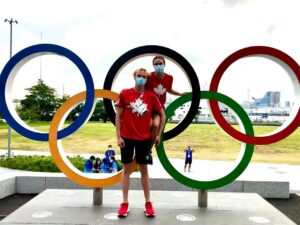
After Tokyo, Pratt left the sport entirely, seeking more balance and new experiences. “I think I just needed time away. I was also starting university, so I wanted to get that going, and see what else was out there. It was a really taxing Olympic year; I really needed to step back.”
Doing just that ultimately gave her the space to rediscover why she started the sport in the first place.
Her career is no longer about ticking boxes — Olympics, medals, major competitions — but about choosing artistic swimming for herself, simply because she wants to be there and because she really does still love it.
“Maybe, in my heart, I just needed all that time away to fall in love with it again. Now, it’s for my own happiness and my own want of doing the sport. I’ve just found so much more appreciation and fun for it every day. I like to go to the pool, I like to train, I like to compete. Leaving also made me realize that there are very few people in the country who get to do what I do. I feel even more grateful, because I never thought I’d have these opportunities again.”
Pratt’s return to the international stage in 2025 came quickly. She swam in the World Cups in Soma Bay and Markham, in both technical and acrobatic teams. Later on that summer, she helped Canada to an eighth-place finish in the acrobatic team at the World Championships, continuing to build experience in this new artistic swimming.
Naturally, her family’s support remained as meaningful as ever through this process. Her parents were able to travel to Singapore to see her compete at a World Championships for the very first time. All of them also stayed on to watch Cole, swimming for Team Canada the following week.
Having her parents there was a first and an emotional highlight for her. “It just warms your heart. They’d never seen me compete at a World Championships before. Even though I’m older now, it still feels so nice, so warm and fuzzy knowing that your parents are there to watch you. It’s just really awesome for them to see all the hard work they put in for us as kids pay off.”
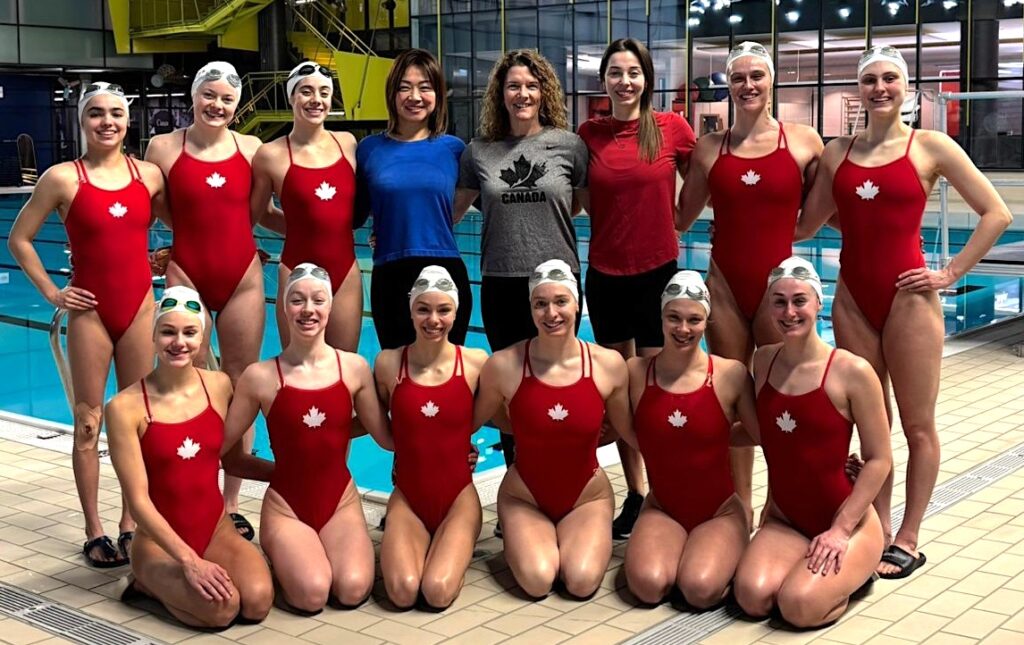
Looking ahead, her goals are centered on growth rather than results, all while easing the pressure that once came with chasing perfection. Returning after several years away has also reshaped how she measures progress, especially within the sport’s evolving system.
“I knew coming back was going to be really hard, so I’ve tried to be realistic during this process. I told myself it was okay if I didn’t get selected or make that first World Cup roster. Having that bit of grace with myself, and knowing there’s more to my life outside the pool, has been really important mentally.”
That mental shift is indeed closely tied to the life she has built outside the pool. Alongside her elite training, she is continuing her university studies in psychology, making time for friends, and prioritizing personal growth; all things she now sees as essential to maintain a healthy balance as an elite athlete.
That broader perspective has allowed her to approach the sport with more patience and self-compassion. “I’m less hard on myself. My life is more well-rounded now. I try not to let synchro be the only thing I have going on, and it’s really helped.”
After stepping away at the peak of her career, Pratt has returned with a renewed appreciation for the opportunity and the journey itself. Her focus now is on sustainability: taking care of her mind and body, continuing to learn, and allowing space for life outside the pool.
In doing so, she has found a version of sport that means more than ever before.
ARTICLE BY CHRISTINA MARMET
If you’ve enjoyed our coverage, please consider donating to Inside Synchro! Any amount helps us run the site and travel costs to cover meets during the season.