
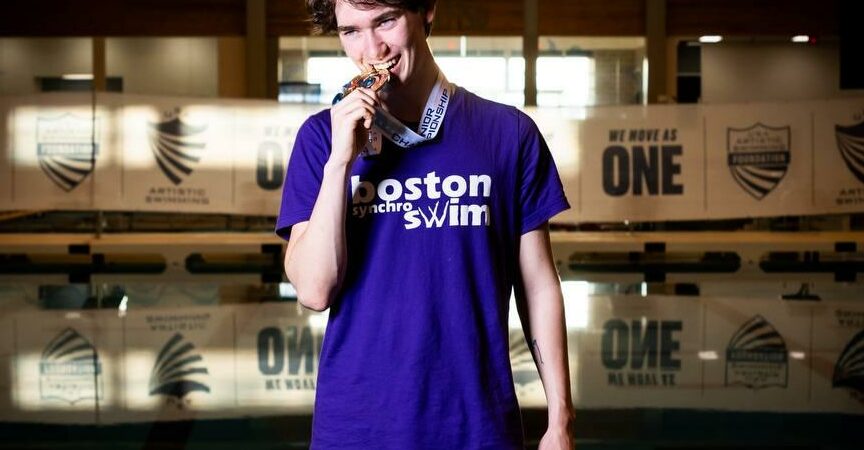
Eldar Blazh, a first-year engineering student at Wheaton College in Massachusetts, will make his mark this season as the first man on a U.S. collegiate artistic swimming varsity team. At 20 years old, he enters the collegiate scene after spending two years rebuilding his life and career in the United States.
Blazh grew up in Russia, where he became a multiple-time national champion in male solo and mixed duet, before being selected for the Russian junior national team in 2022. However, he and his family left the country before he was able to compete internationally, and after some time abroad, they arrived in the U.S. in May 2023.
The roots of Blazh’s journey in artistic swimming trace back to his childhood, and, in many ways, to his mother and older sister.
“This story started when I was just seven years old. Me and my mom used to pick up my sister Vasilisa from artistic swimming practice. I liked regular swimming, but when I asked my mom if I could join a swimming team, she sent me to the artistic swimming team. Back then, in 2012, it wasn’t really a sport for boys at all. So I quickly was moved to regular swimming, which I did almost seven years.”
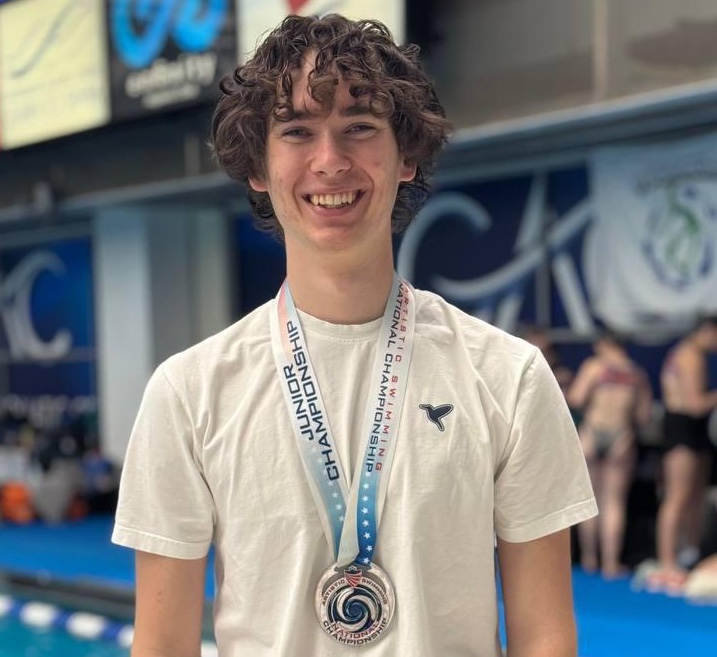
It wasn’t until he was a teenager that he really kicked off his artistic swimming career: “One summer, we were on a vacation with Vasilisa. As a joke, she asked me if I wanted to just learn a hybrid, try some elements… Right after that, I told my mom that I wanted to do artistic swimming.” It turns out, his mother had been on to something.
About a week later, in September 2018, he began practicing with Vasilisa’s team in his hometown of Rostov-on-Don. At 13, Blazh was the eldest of three male swimmers on the team — of the other two, one was about a year younger than him and the other was only nine or ten years old.
“I remember competing in my first Russian Championship in 2019, in February. It was like five months after I had just started, and I barely could stand in the vertical [position]. I remember competing against no one — and many times after that, I was usually competing against myself, or there were just a few boys in my age category. That was kind of upsetting, that the sport was not really popular among boys.”
After that championship, Olympic champion Olga Brusnikina noticed Blazh’s technique and rapid improvement, inviting him and Vasilisa to Moscow for a summer training camp with her team. He then spent the next few years with the team of the Olga Brusnikina Synchronized Swimming Center, practicing six days per week and around nine hours per day — one practice before school, and one afterwards. During this time, he continued to earn top placements in the male solo and mixed duet events.
At the 2021 Russian National Championship, he finished second in both the technical and free mixed duet events with partners Anastasiya Krapivina and Svetlana Khodyreva. At the Junior National Championship, Blazh and Krapivina won gold in both mixed duet events. In January 2022, Blazh and his two duet partners once again placed first in both mixed duet events at the Russian Junior National Championship.
Subsequently, Blazh was selected for the Russian junior national team ahead of the 2022 World Junior Championships in Quebec City, Canada. “After I won multiple Russian Championships, the head coach of the junior national team noticed me,” Blazh said. “She came to my coach, and she told her that I’d be a good fit for the team, that I could compete against boys on the world arena.”
However, he never got to compete there. About a month or so after being selected, he and his family left the country. “I left Russia right after the war started — it was March 10, or something — to Serbia, where I spent a year mostly working and just making money to support my family.”
During the summer, he practiced with the Serbian national team to keep in shape while he applied to join teams across Europe. “[Vasilisa] had moved to Poland already a year before. So, she started driving around to the World Cups, asking coaches if they would help me get citizenship and compete for their teams. But male artistic swimming was not in the Olympics, so it was really hard to get any sort of support.”
Eventually, Blazh and his family — including Vasilisa — began making their way to the United States, where his older brother had been studying at the Berklee College of Music, in Boston, Massachusetts. “We ended up going to the United States through the Mexico border, [as asylum seekers] through the CBP One program,” Blazh said.
They arrived in Boston in May 2023. After having few opportunities to train in the months between leaving Serbia and coming to the U.S., Blazh sought to return to regular artistic swimming practices.
“That summer, I joined the male summer camp at the Santa Clara Aquamaids club with Bill May, who I had been in touch with too. I was expecting a lot of older guys there, who had been doing artistic swimming for many years, who would have a lot of experience to share. But it turned out that I was the oldest one. It was still really fun — I felt like we have a lot of boys who are growing up and who will be a new generation of artistic swimming males.”
Back in Boston, Blazh quickly became involved with the local club, Boston SynchroSwim, thanks to his sister Vasilisa. She had posted on Facebook offering private swimming lessons, and a family friend commented that she was also an excellent artistic swimming coach. The head coach of Boston SynchroSwim saw the comment and reached out, inviting her to visit the team, which was preparing for a summer show. Shortly afterward, Vasilisa became an assistant coach, and he began training with the team.
“The rules of artistic swimming had changed significantly while I had been out of the sport, so when I joined, I had to get used to the new scoring system and new requirements. At the same time, I was getting used to life in the U.S., learning English, and adjusting to a completely different training environment. But the team was incredibly supportive.”
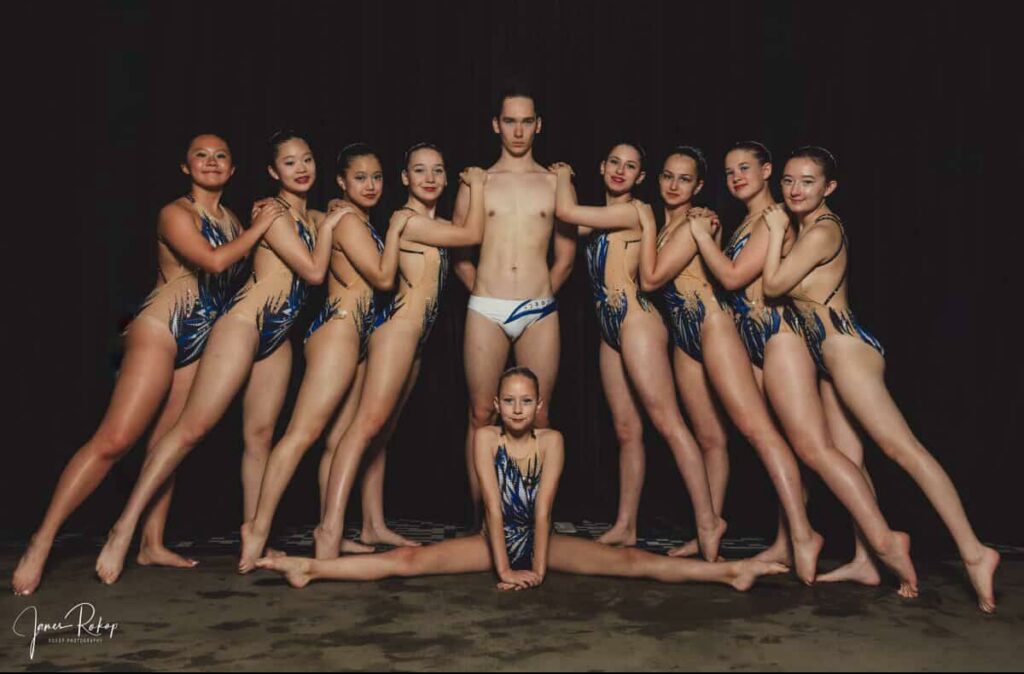
Over the following two years, Blazh competed at the U.S. Junior National Championships and U.S. Junior Olympic Championships, earning medals in solo, mixed duet, and combo events. At the same time, he also competed for his high school swim team, winning the Massachusetts State Championship in 2023 and finishing as runners-up in 2024.
Now, Blazh is continuing his artistic swimming career at Wheaton College. “I received an email from the [Wheaton] coach saying that they would love me in their team. It happened, I think in September, right after my senior year started. After committing to the college as a commuter, waking up at 4:30 a.m. each day to travel to practice in Wheaton has been one of the hardest parts for me. I still can’t fully adjust to a new schedule and keep up good grades in my classes, but I’ll get there.”
At Wheaton, Blazh will compete in solo, mixed duet and team events, as well as in Collegiate A Figures. In November, he placed second in A Figures at the New England Synchronized Swimming Association Figures competition, Wheaton’s first meet of the season. In January, the Wheaton team will attend its first routine competition of 2026 against The Ohio State University, and at the end of March, will compete in the 2026 U.S. Collegiate National Championship.
Blazh’s aspirations in artistic swimming also go beyond college. He had hoped to compete in mixed duets at the 2028 Olympics as part of the Refugee Team, alongside one of his younger sisters, Nadia. But since that event isn’t currently on the programme, he is now looking toward the 2032 Olympics. Although it is still seven years away and much could change, he remains motivated to pursue this goal.
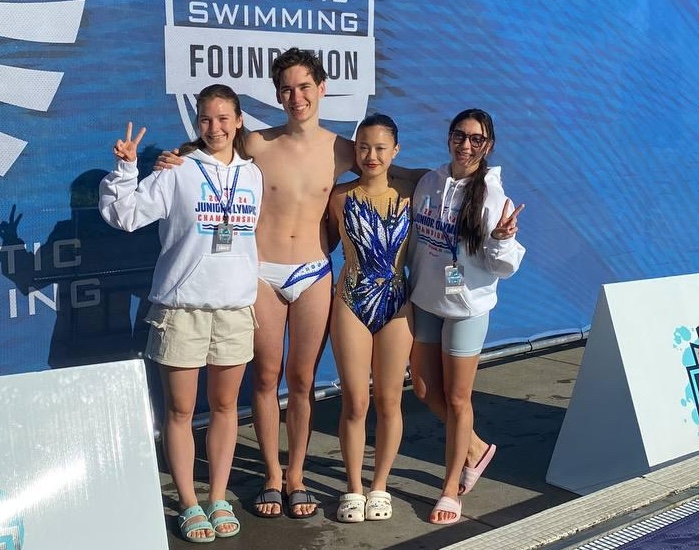
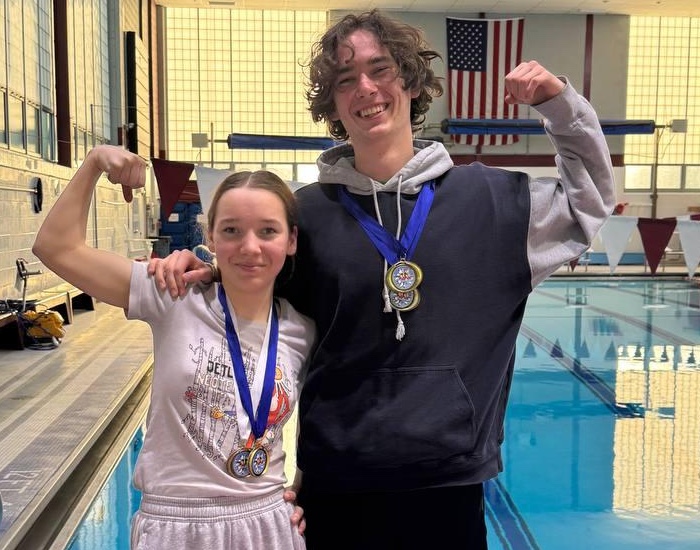
But for now, as he continues his career at Wheaton, Blazh’s presence marks a shift in the landscape of collegiate artistic swimming. While a few men have competed on club teams in the past, he is the first to join a varsity roster. In a sport where male athletes remain rare, he represents both what is possible now and what may follow, inspiring the next generation of male artistic swimmers to seek more opportunities to stay in the sport.
“I’m just hoping that there will be more guys to compete against at a collegiate level. Boys around my age are just quitting the sport, it’s really sad. I would tell them not to quit. Try new things. To try more routines, try yourself in solos and mixed duets. Be out, talk to your friends about artistic swimming, call them to the meets. Spread out artistic swimming into the masses.”
ARTICLE BY MARI FLORES
Cover photo: James Rokop
If you’ve enjoyed our coverage, please consider donating to Inside Synchro! Any amount helps us run the site and travel costs to cover meets during the season.