
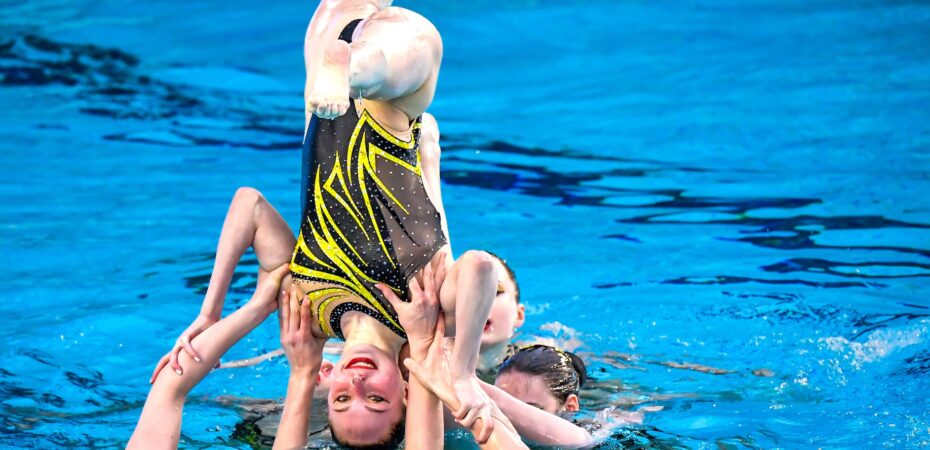
The third and final day of competition at the Paris World Cup wrapped up the meet with four events on the schedule: men’s and women’s free solo, free mixed duet, and acrobatic team to close things out in style.
Despite losing an hour of sleep to the time change, athletes were back in action early, and the day brought a welcome spread of gold medals, with the People’s Republic of China, Germany, Italy, and Ukraine each claiming a win to round off the competition.
Men’s Free Solo
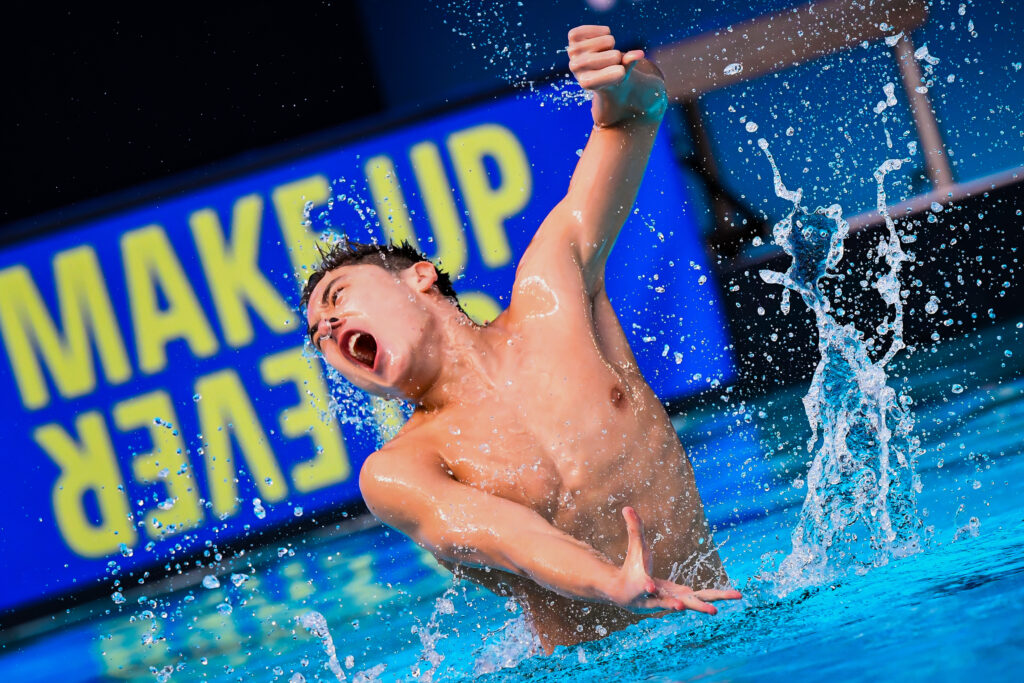
The final day of competition got underway early in the morning with the men’s free solo, featuring nine athletes and setting the tone early.
It was a second gold in Paris for Guo Muye of the People’s Republic of China, who continues to impress at just 17 years old. The reigning vice-world champion, already victorious in the technical solo earlier this weekend, delivered once again with his “The Quest” routine, choreographed by Bill May. With the highest Degree of Difficulty (DD) of the field at 55.90 – surpassing the previous benchmark of 52.50 – he lived up to his status as the favorite, combining difficulty and control for a winning total of 259.4950.
Like in the technical event, silver went to Great Britain’s Ranjuo Tomblin, who also unveiled a brand new routine. The European bronze medalist and reigning European Junior Champion in the event made his season debut in free solo here, presenting a program built around a journey “from struggle to power.” Also working with Bill May on that choreography, he scored 235.2038.
“This feels very good, this is a brand new free solo for this season,” Tomblin said. “Again, I’ve had the opportunity to work with Bill May on some of the transitions and really improve on my artistic impression so I’m really glad to be able to perform and improve on that aspect.
Bill brings a new energy and variety of transitions that we wouldn’t necessarily come up with, and he’s the GOAT for men’s artistic swimming so I am so grateful to be able to work with him.”
Bronze went to Italy’s Gabriele Minak, the European Junior silver medalist, with a score of 230.4400. His “Alien or Human?” routine, first introduced last season but continuously evolving, carried the second-highest DD of the field at 52.75. Still only 19, Minak continues to build momentum at the senior level.
His teammate Filippo Pelati, the current world bronze medalist and European silver medalist in this event, came in as a strong podium contender with his “Devil” routine. However, it proved to be a difficult outing, as three basemarks ultimately knocked him out of medal contention.
Women’s Free Solo
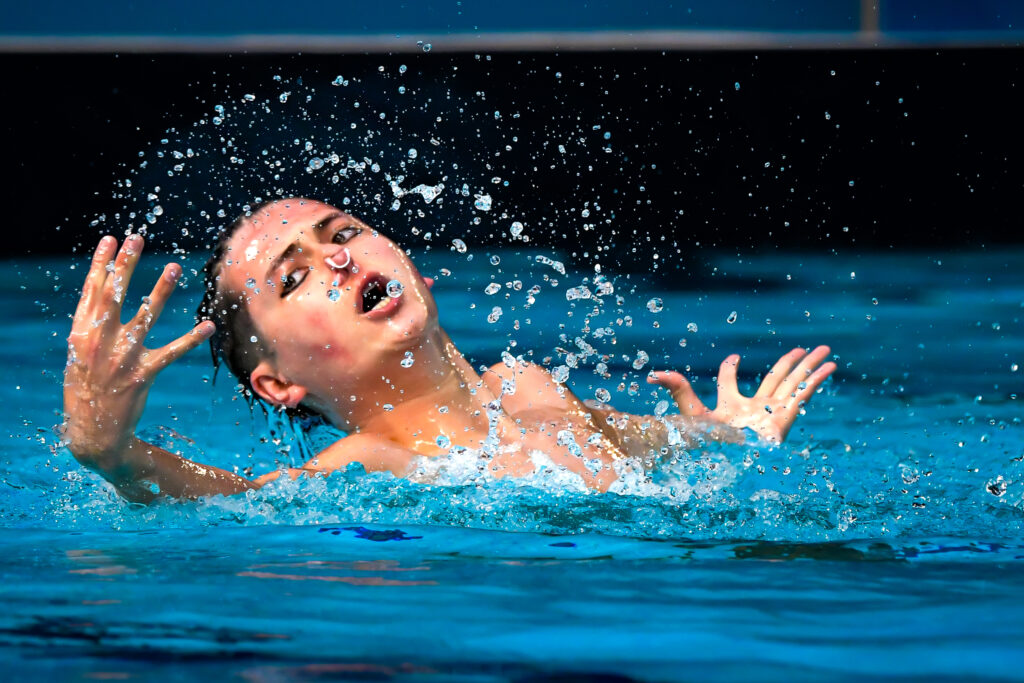
Nineteen athletes took to the pool for the women’s free solo, with a familiar podium, though in a slightly reshuffled order from the technical event.
This time, it was Germany’s Klara Bleyer who came out on top. After taking silver in the technical solo, the reigning European Champion stepped up to gold here with her “Space” routine, which she has been refining since last season. Delivering the highest DD of the field at 60.2 – just shy of her 60.4 from last year’s World Championships – she combined difficulty with a very secure and composed swim to earn 276.8925.
Silver went to Vasilina Khandoshka of Neutral Athletes A with a score of 268.5427. The reigning world bronze medalist unveiled a brand new routine, moving on from her iconic “Mummy” program to now present “The Silent Scream.”
With a lower DD (56.15) than what we may have come to expect from her, the resulting routine was no less captivating. It was a mesmerizing and highly engaging performance, once again showcasing her ability to fully draw in the audience, and she looked completely unfazed physically at the end of it.
Her ability to constantly reinvent and challenge herself, whether in style, theme, or music, is truly remarkable, and it’s exciting to see that evolution unfold at every meet.
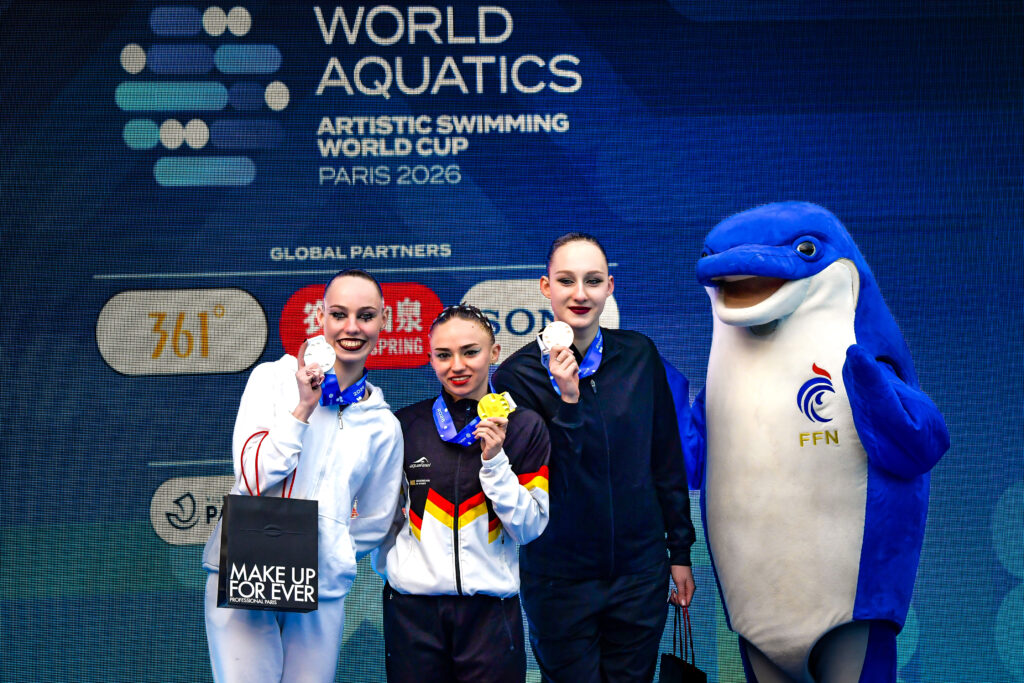
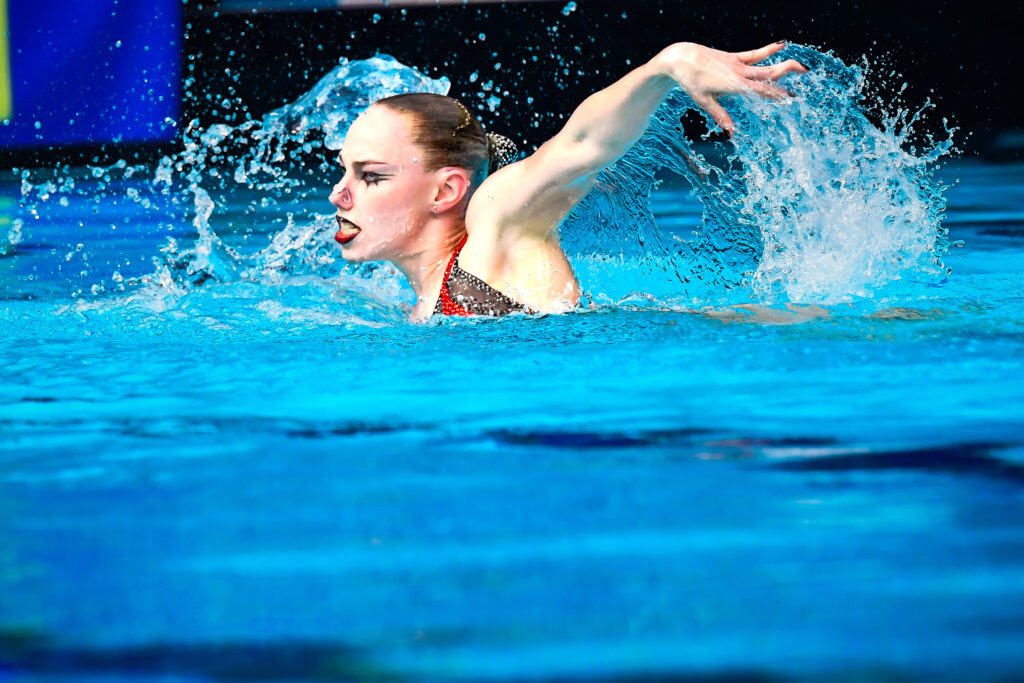
Like in the technical event, bronze once again went to Neutral Athlete B Valeriia Plekhanova, who maintained her position on the podium with a routine set to “Maybe I Maybe You” by Scorpions, scoring 264.5938.
Italy’s Enrica Piccoli, the European silver medalist, finished just off the podium in fourth with a clean swim of her new routine set to “Berghain” by Rosalia.
Just behind her in fifth was Maria Alavidze of Georgia, who delivered a clean and confident performance to score 249.2864, a particularly satisfying result after a difficult debut in Medellín. Swimming to the Georgian song “Ananke” by Mgzavrebi, she brought a strong sense of identity to the pool, proudly showcasing her culture through her routine.
It was also encouraging to see the Netherlands field new faces at the senior level. With their usual soloist Marloes Steenbeek competing at the U.S. Collegiate Nationals this same weekend, the door opened for others to step in.
Noortje Reijnen returned to international competition for the first time since the 2022 World Junior Championships, while 15-year-old Noa Van Ettinger continued her progression after appearing at last year’s World Youth Championships. Their respective 10th and 11th places already offer a promising glimpse into the next generation.
Free Mixed Duet
Six mixed duets took to the pool later in the afternoon for the free mixed duet event.
This time, it was Italy’s Filippo Pelati and Lucrezia Ruggiero who came out on top with 256.0033. The European silver medalists, now in their second season together, delivered the highest DD of the field at 52.5, raising the previous benchmark held by Great Britain. Performing their “Argentine Tango” routine, carried over from last season, they showed a clear step up compared to their technical event earlier in the meet.
This medal and overall performance marked a much-needed turnaround after a difficult few days: Pelati had missed the podium in the solos due to basemarks, Ruggiero had faced similar issues in the women’s duet, and the pair themselves had also incurred a basemark in the technical mixed duet yesterday. Here, with a clean swim, they were finally able to put everything together.
“This gold felt very hard,” Ruggiero said with a laugh. “We’re really happy with what we did, especially because this competition hasn’t been great for us, so it was even harder mentally to stay focused. Each event is different, so what I told Filippo before we started was to leave everything behind us, do what we know how to do well, and if there’s something we can’t do yet, we’ll work on it and improve it next time.”
On their second season together, Pelati added:
“We know each other much better now, we’re more confident as a pair. We compete a lot together, at international level, but also at the Italian Championships. We train and live in Savona together with Enrica [Piccoli], so obviously we spend all our time together… maybe only when we sleep we are not together! That makes us feel more comfortable and more confident with each other in the water.”
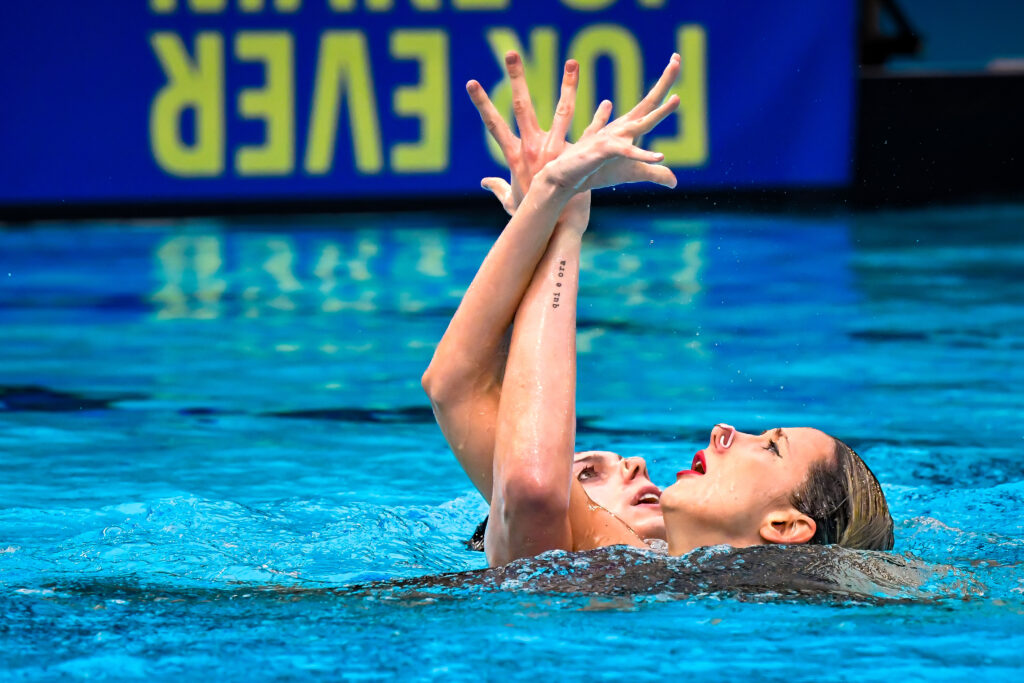
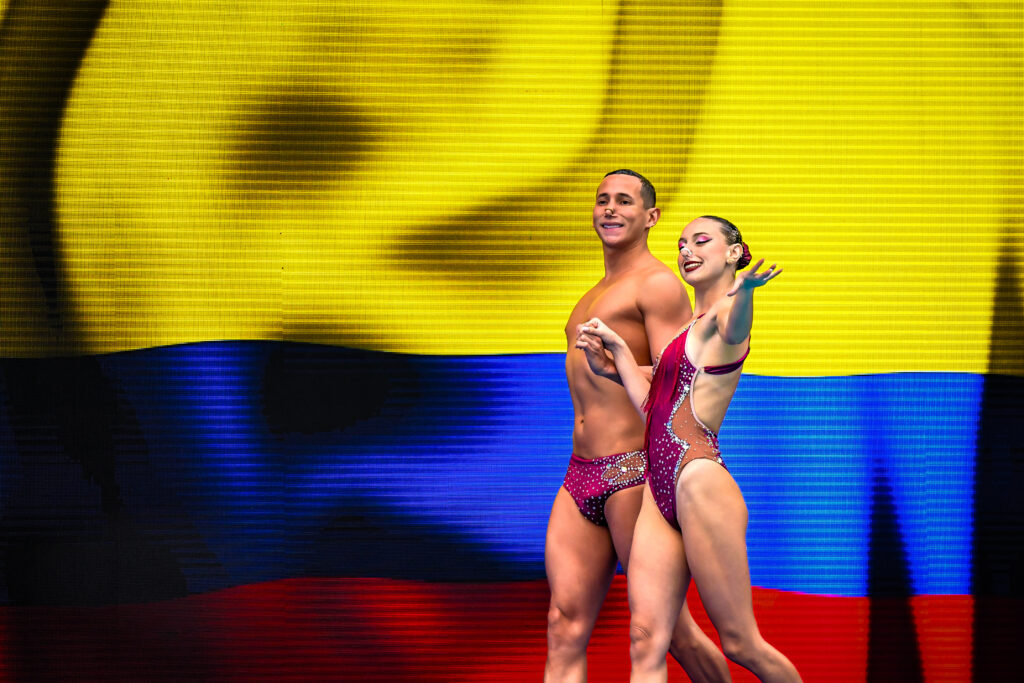
Silver went to Colombia’s Emily Minante and Gustavo Sanchez, continuing a very strong World Cup for the pair after their bronze in the technical event and silver in Medellín. Their “From Cali to the World” salsa routine, already seen last season, once again connected well with the crowd, and with a clean swim – one of only two in the field – they secured silver with 251.2967.
Great Britain’s Isabelle Thorpe and Ranjuo Tomblin, the reigning world bronze medalists and also in their second season together, clinched the bronze with 249.1125 with their “Conflict between Light and Darkness” routine, debuted last season. They also notably received a perfect score on their opening pair acrobatic, with four 10s from the five execution judges.
Despite a visible issue on one of their hybrids – a timing and placement error that resulted in a basemark – they managed to hold onto a podium position thanks to their very strong artistic impression, finishing ahead of Italy’s junior pair Ginevra Marchetti and Gabriele Minak.
Acrobatic Team
The final event of the day was the ever-spectacular acrobatic team, bringing together seven nations and closing the session on a high-energy, high-risk note. In terms of difficulty, teams were relatively aligned, with all medal contenders sitting in a similar DD range around 22–23, keeping the competition wide open until the very end.
The event certainly delivered. Of the seven teams, six received at least one score of 10, a reflection of both the ambition and the level on display. Ukraine, Italy, Israel, the People’s Republic of China, the United States, and Kazakhstan all hit that mark, with the Americans notably earning five 10s in total, including one in Artistic Impression.
In the end, gold went to Ukraine, competing here only in this team event (alongside the women’s duets) and once again demonstrating why the nation remains one of the pioneers of acrobatics in the sport.
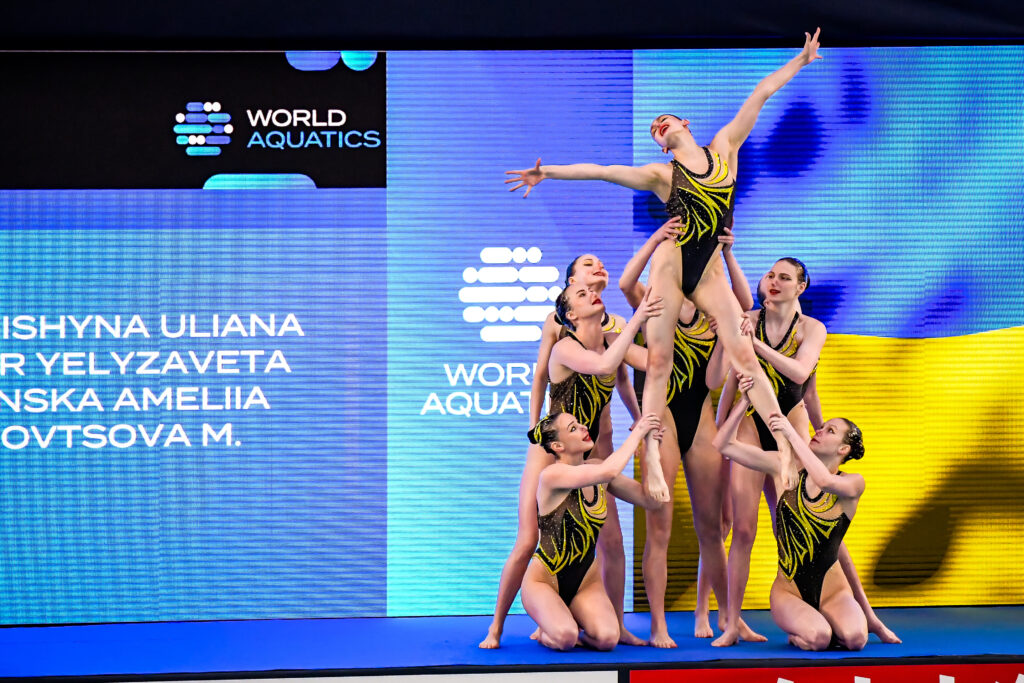
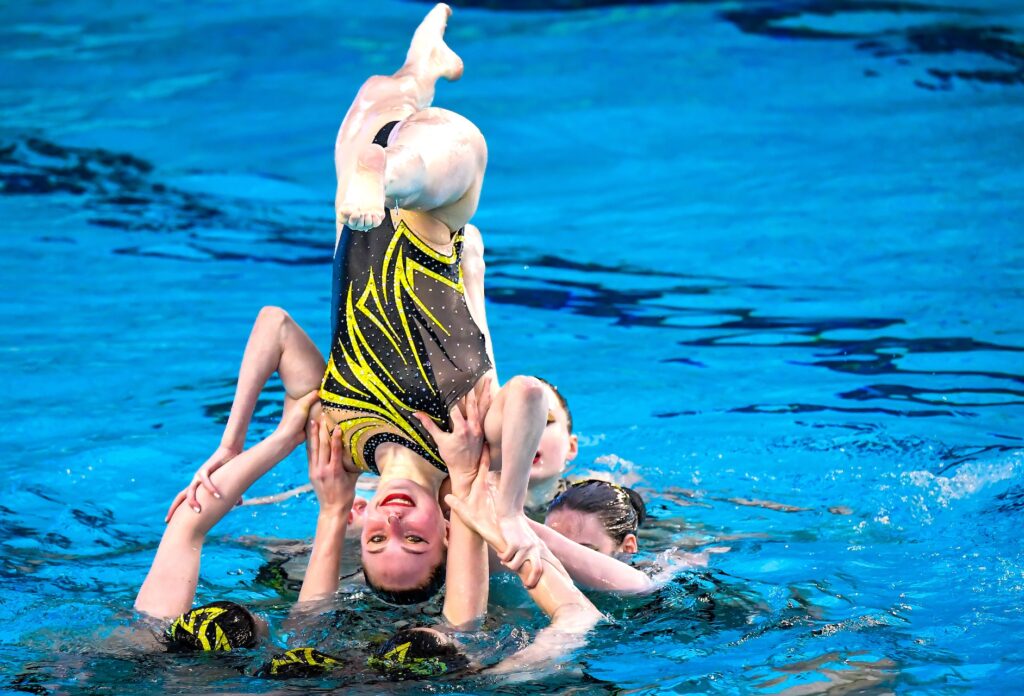
The European silver medalists presented a new routine set to Verdi’s Requiem and Carl Maria von Weber’s “Ruler of the Spirits”. Despite some changes in the lineup – including the notable absence of last season’s featured swimmer Oleksandra Goretska – the team continues to deliver at the highest level, even amid challenging training conditions.
Their performance received a total score of 212.4735 and stood out for its complex, high-risk elements. A particularly notable moment came midway through, with a combined acro where the flyer appeared to “walk up the stairs”, taking two steps from one base’s foot to another.
The final platform was equally impressive, not only in its sustained complexity and difficulty, but also in its placement at the very end of the routine. Altogether, the program carried a sense of familiarity, echoing the style of past Ukrainian routines, while still pushing forward in innovation.
Italy took silver with 200.6714 for its “Chicago” routine. The reigning European Champions did incur a basemark on their second-to-last acro, but their strong artistic impression and the ability to capitalize on mistakes from other medal contenders kept them firmly on the podium.
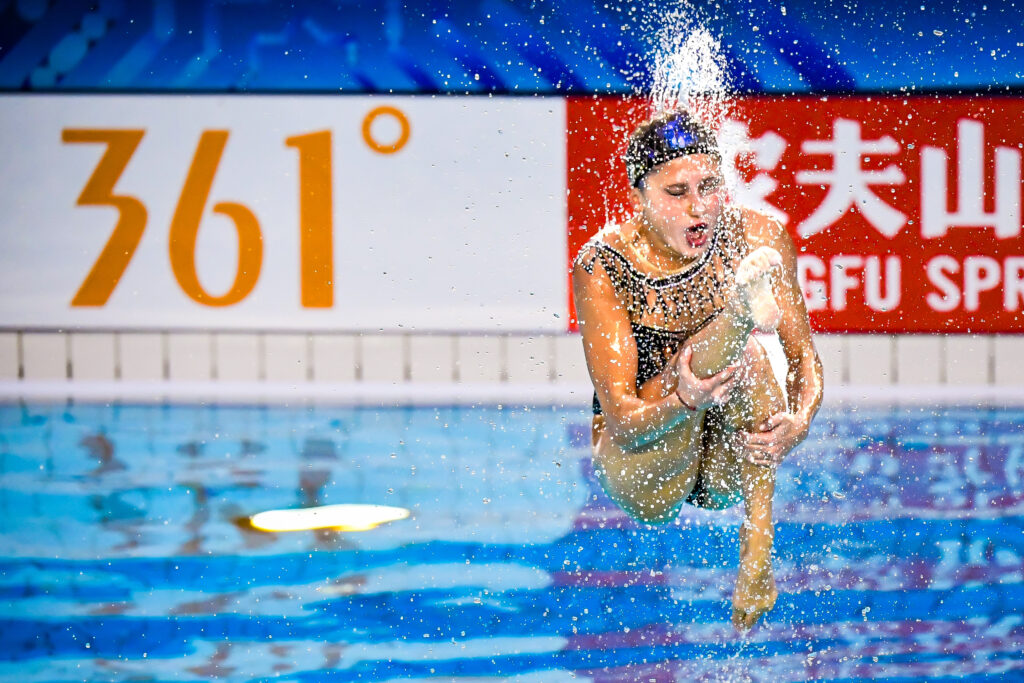
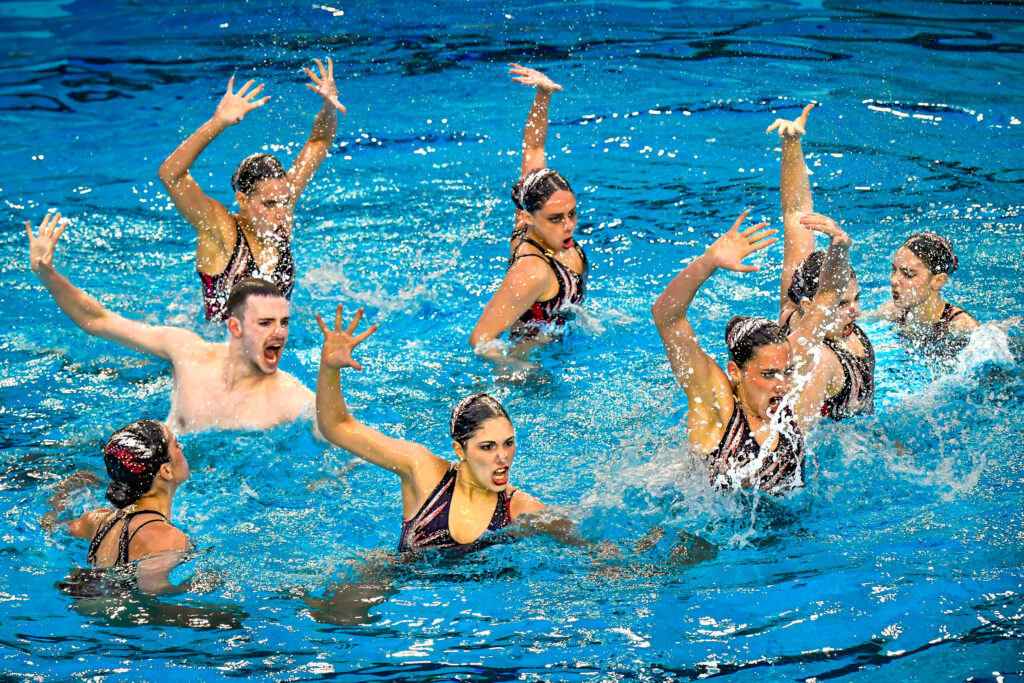
Bronze went to Israel with 194.6005, a somewhat unexpected but well-earned podium, with its new “Nightmares” routine. The athletes performed to music previously used during the 2023 season, but reworked with a new choreography by former Ukrainian national team member and now head coach Valeria Aprielieva, alongside former national team athlete Yael Polka.
In the end, they delivered a clean and confident performance without basemarks, which proved to be crucial in that final.
“I am very happy that we are returning home with a medal,” Aprielieva said. “On the one hand, I am surprised because we beat countries like China and the USA, which are some of the bests in the world, but on the other hand, we worked very hard and arrived prepared. Since the beginning of the year, Yael and I have worked a lot on the team’s movement and expression, and we have brought its artistic ability to a new level. This is a young team, all of them are juniors, so it’s a small step and there is still a lot of work to do, but it starts the year with the feeling that we are on the right track.”
Also of note, Kazakhstan’s junior team unveiled a new “Beetlejuice” themed routine, choreographed by Tatiana Gayday, who recently retired after competing in solo and duet as Neutral Athlete B at the Singapore World Championships. It was a fresh and engaging program that added further depth to an already entertaining final.
ARTICLE BY CHRISTINA MARMET
Cover photo: Dimitris Mantzouranis
If you’ve enjoyed our coverage, please consider donating to Inside Synchro! Any amount helps us run the site and travel costs to cover meets during the season.