
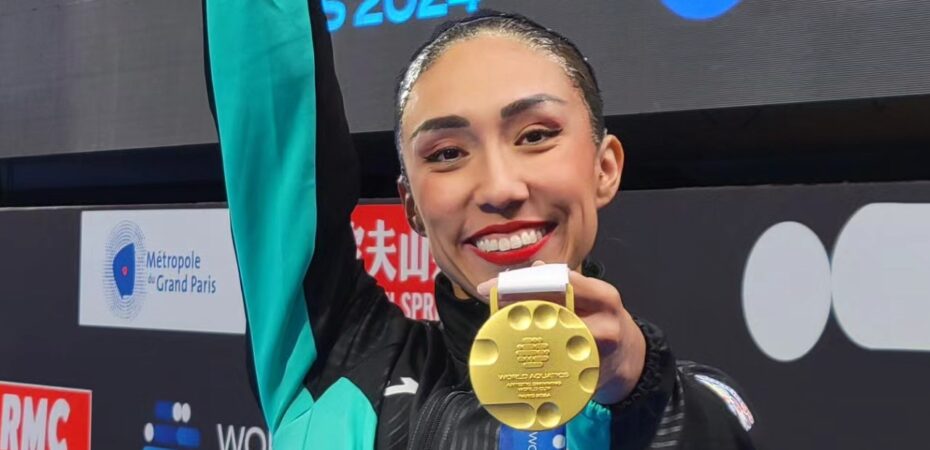
An emblematic figure of Mexico‘s national artistic swimming team, Joana Betzabé Jiménez García has been a constant presence on the international stage since she first made the junior national team at 15 years old.
Now, nearly two decades later, she has represented her country in solo, duet, team, and most recently mixed duet, in international competitions, establishing herself as one of the world’s most renowned and versatile artistic swimmers.
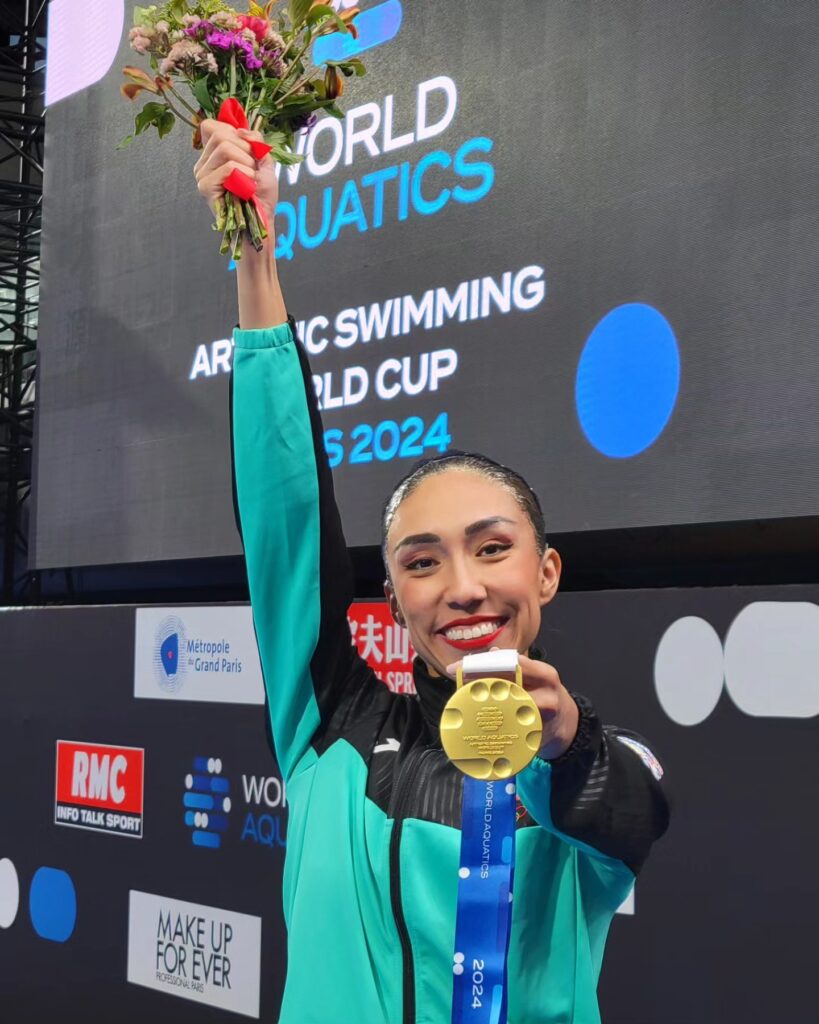
Over the course of her career, she has medalled five times over four Pan American Games and competed in nine World Championships, the first of which came in 2011.
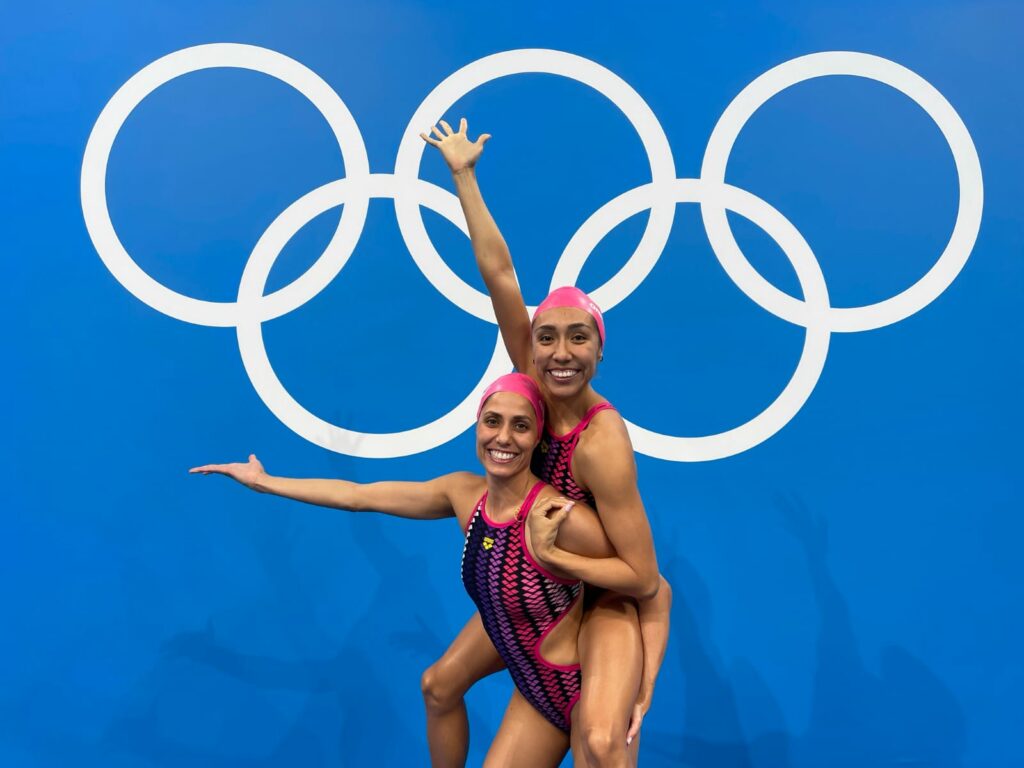
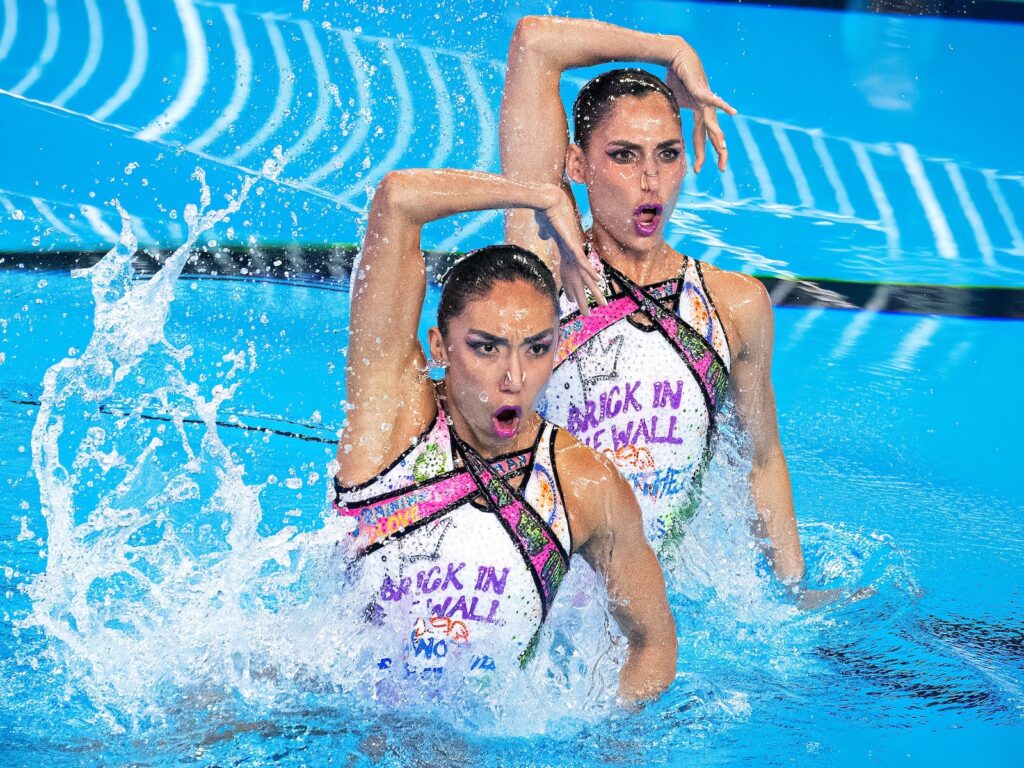
She made her Olympic debut at Tokyo 2020 in duet, before returning in Paris 2024 to compete in both duet and team events — the latter marking Mexico’s first Olympic team appearance since 1996, a milestone she also helped secure.
At last season’s World Championships in Singapore, Jiménez made her mixed duet debut in the technical event, placing fifth. She also swam in the free and acrobatic team events, in which Mexico placed sixth and fifth, respectively.
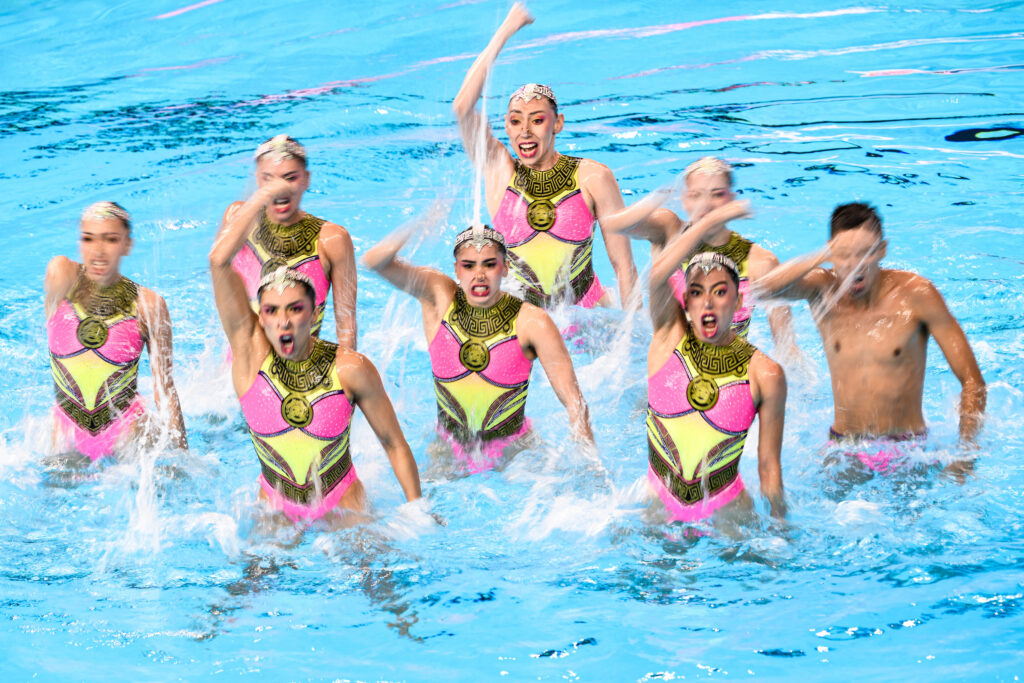
Just last month, she helped Team Mexico to a gold medal in the technical event at the season-opening World Cup in Medellín, Colombia. A few weeks later, she clinched three golds in technical duet, free team and acrobatic team at the Pan American Championships, helping the nation qualify for the upcoming Central American and Caribbean Games.
At age 32, Jiménez is one of the oldest athletes still competing at the elite level — but she shows no signs of slowing down, continuing to set new goals and working to inspire the next generation of artistic swimmers.
Inside Synchro: How did you first discover artistic swimming?
Joana Jiménez: That is a funny question because I started my career in [regular] swimming, but the coach told my mom that I had a lot of energy, and I could do the trial in another club with a higher level.
When we arrived at the club, I saw a lot of girls swimming with music, and for me that was like a game, so I wanted to be there. Obviously, my mother said “no” at first, because I went for the swimming trials. But finally I convinced her, and after that I chose artistic swimming.
IS: What was your artistic swimming experience while you were growing up, and what was your journey to the national team like?
JJ: At first, it was like a game for me. It felt like I was playing with my teammates in the water with music, so it was very fun.
But when I was 11 or 12 years old, my coach showed me a video of Gemma Mengual’s solo. It was very impressive because of the strength, the grace, the way that she used the water to share her emotions.
For me, it was very impactful, and when the video finished I said to myself, “I want to do that, and I want to be in an international competition representing my country.” That made me decide to train with more power and decision.
Obviously it wasn’t easy. While training, all my teammates but me got a spot in the national team, so it was very frustrating. I thought about quitting — actually I did, and started playing basketball for a year.
One year later, I came back to artistic swimming, and finally when I was 15 years old, I got my first spot in the junior national team. I swore to myself that nobody was going to take me out of the national team, and one year later, I got a spot in the senior national team as the reserve of the reserve of the reserve!
IS: Do you remember your first international competition?
JJ: Of course! It was with the junior national team at the UANA Pan American Championship. We got the bronze medal in team, and it was such a big experience. The competition was very exciting with all the international teams, and it opened my mind to other horizons. And I had my family there with me cheering me on!
IS: Tell us about your experiences at the Olympics in Tokyo and Paris — both the competitions themselves and what led up to them.
JJ: This is a big question because both of them were very important to me. Tokyo was a competition where I had a lot of emotions because it was my first Olympics with Nuria [Diosdado]. She was a guide for me and helped me to believe in myself. Besides, we made and have a beautiful friendship. It was more than a duet — we were and are sisters and best friends, and that helped me a lot to enjoy the competition.
Now, Paris, what a big competition! There were a lot of factors that impacted me, from the new rules, to a lot of fears and mental pressures that I didn’t realize [I had] in the moment.
As a consequence, I had a big mistake [in the technical team routine] that affected me a lot. I was very confused, and very angry with myself… Also very sad and frustrated because I felt that I failed my team and my country.
So, that competition taught me a lot about taking care of myself, putting a lot of attention on myself as a person, before the athlete, and to be brave when I feel that something isn’t right with me.
IS: What are some of the most memorable moments from your career?
JJ: All the moments with Nuria. We always played, and that made the trainings very fun and different. But if you asked me for a specific competition, I could talk about my technical solo in the Central American and Caribbean Games in 2018. I had a lot of fear of doing the solo, so when I won, it was a lesson for me to learn to believe in myself and to not be hard on myself.
IS: How do you keep such a good attitude and high spirits? What motivates you?
JJ: [I am] 100% [motivated by] my family and myself. My family always is cheering me up and never lets me be alone, and that is enough to [make me] stronger every day. I think that my personality helps me a lot to enjoy every training: playing around with my girls, even with my coaches; doing a lot of jokes; laughing loads and being myself without any mask.
A funny fact is that everybody knows me for my loud laugh. They say that my laugh could be heard from five kilometers away!
IS: You are currently one of the older swimmers on the international level — what has kept you going in the sport?
JJ: All my dreams and my goals keep me going. I feel that I have more to give, that my body has more to give to my sport, the sport that I love. I want to be an inspiration to the new generations to push them to do what I am doing, and [to do it] even better. And of course, I have a lot to give to my country. That’s the big reason!
IS: Do you see yourself continuing to be involved in artistic swimming after your career as an athlete is over? What might that look like for you?
JJ: Maybe, whenever my career finishes, I will want to have a break for my body — and especially for my mind. Because I spent my whole life in this sport and it could be difficult to let it go and continue with my life. After that, I have some plans with my Spanish boyfriend, Fran, which obviously are secret for now!
IS: What is a message you would like to pass to younger athletes?
JJ: As one of the older swimmers in the artistic swimming community, I would like to say that you should be honest with yourself, stay loyal to your values, and believe in your potential. Training and fighting to achieve your goals is the most important key, but don’t forget to enjoy every day as a person before an athlete. Love yourself and take care of yourself, especially your mental health. That’s your strongest and most important tool to achieve your goals.
IS: What are your goals for this season and/or the future?
JJ: As a team, [our goal is to] get a very good, clean and strong routine with a lot of stamina in the Central American and Caribbean Games. For the future, [I want to] fight and compete to get better scores and to have better performances — beyond the scores or the infamous basemarks.
Responses have been edited for length and clarity.
ARTICLE BY MARI FLORES
If you’ve enjoyed our coverage, please consider donating to Inside Synchro! Any amount helps us run the site and travel costs to cover meets during the season.