
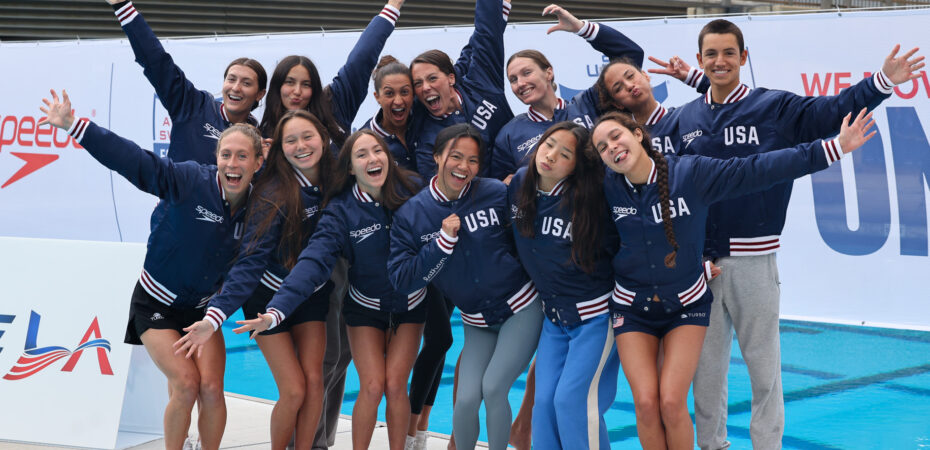
From May 1 to 3, USA Artistic Swimming (USAAS) held trials to select the athletes who will train on the U.S. Senior National Team in preparation for the 2028 Olympic Games in Los Angeles. Out of a pool of 20 athletes, 13 were selected as the official Olympic training squad.
USAAS is among the earliest federations to select their training squad for the upcoming Olympic Games, a decision the organization introduced through its “LA’s First Team” campaign on social media.
With the Games’ opening ceremony still more than two years out, this selection may seem early. But USAAS put a great deal of thought into holding Olympic squad trials at this point in time, allowing the selected group to begin training together as early as possible, and ahead of upcoming major competitions such as the World Championships and the Pan American Games.
Over the next two years, the athletes will train full-time in Los Angeles, focusing on building cohesion and refining routines as they prepare to compete on home soil in 2028. No additional swimmers will be added to the squad during that period, emphasizing the importance of continuity and long-term team development in pursuit of another Olympic podium finish.
Four swimmers from the Paris 2024 silver medalist team were among those trying out for the LA team: longtime national team member Daniella Ramirez; three-time Olympian Anita Alvarez; Jaime Czarkowski, who represented the U.S. in duet in Paris; and Ruby Remati, who recently finished her final season with the artistic swimming team at The Ohio State University.
The other athletes trying out for the squad included everyone on the U.S. national team roster from this season, as well as the top six athletes from the Senior National Team trials held at the U.S. Junior/Senior National Championships in early April.
The selection committee consisted of senior national team coaches Megan Abarca, Paula Klamburg and Marivi Escalona, USAAS Chief of Sport Lara Teixeira, and World Aquatics judges Erin King and Kim Kohut, ensuring the process incorporated both coaching insight and judging expertise.
Months prior, Teixeira had worked closely and extensively with the national team coaching staff to design each of the eight tests for these Olympic trials.
“From my perspective of running trials events for a long time now, every time that I’m designing and planning, there’s this drive and this motivation to have the athletes centered [as] the focus of the conversation,” Teixeira said. “Meaning that, yes, we need to select the best athletes, but how can we make it as fair, as transparent, and as inclusive [as possible]?”
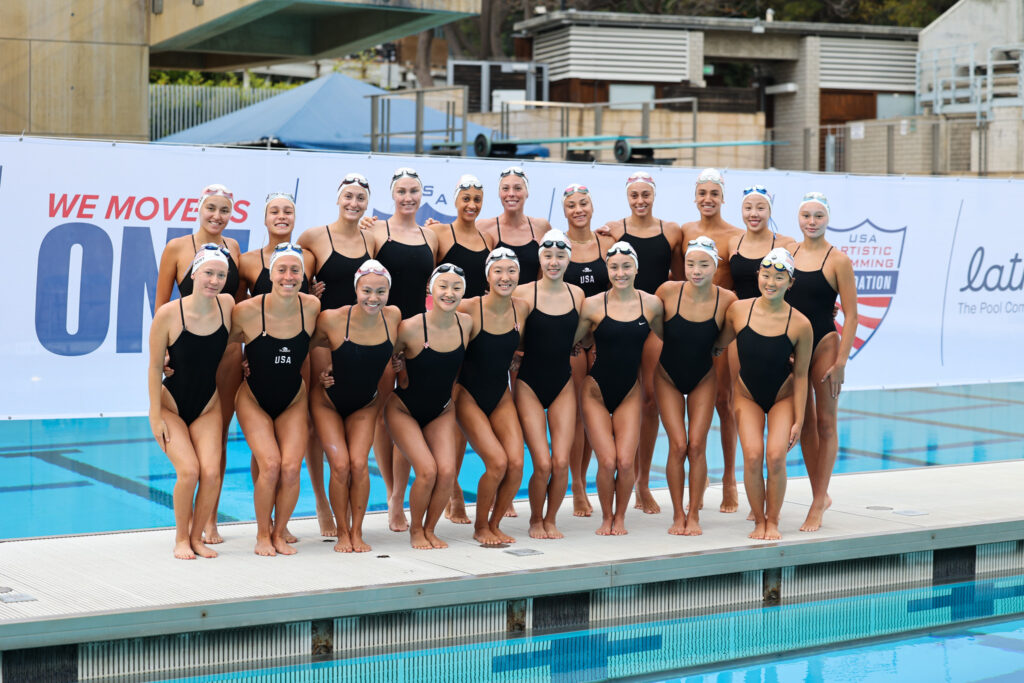
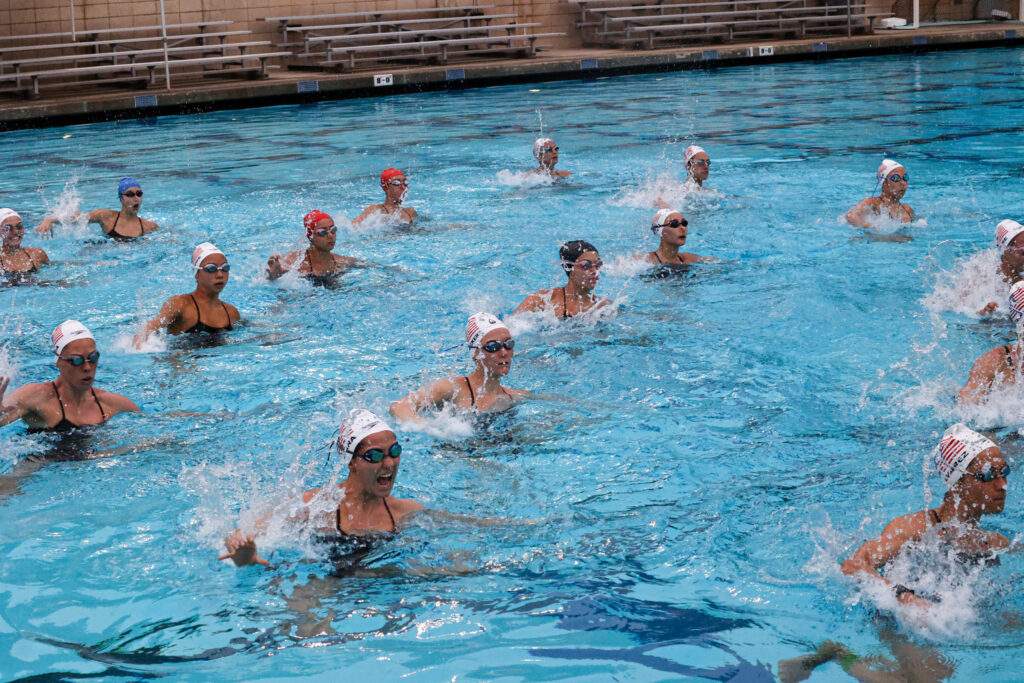
On day one, athletes completed a basic skills assessment, a one-on-one interview with Abarca, the head coach, individual swims of the USA’s technical team routine from this season, and an acrobatics assessment (flyers only). According to the discretionary criteria from USAAS’ trials procedure, up to two flyers could have been added to the squad if not selected via the general procedure.
Day two began with the “Show Us What You Got” assessment. Each swimmer was asked to perform a one-minute routine to music of their choice, self-choreographed to showcase their strengths through one DD hybrid and one non-DD hybrid.
“We were giving them the opportunity to think strategically, kind of getting into how the coaches actually act. We always incentivize collaborating on strategy, because the [athletes] have their own thinking,” Teixeira said. “This task was really good to give them the autonomy to strategize and to bring their strengths.”
The second day also included group swims of the technical team routine, as well as part one of the free team choreography assessment. There, athletes were tasked with learning choreography from Klamburg on-site and executing it shortly afterwards in a group swim.
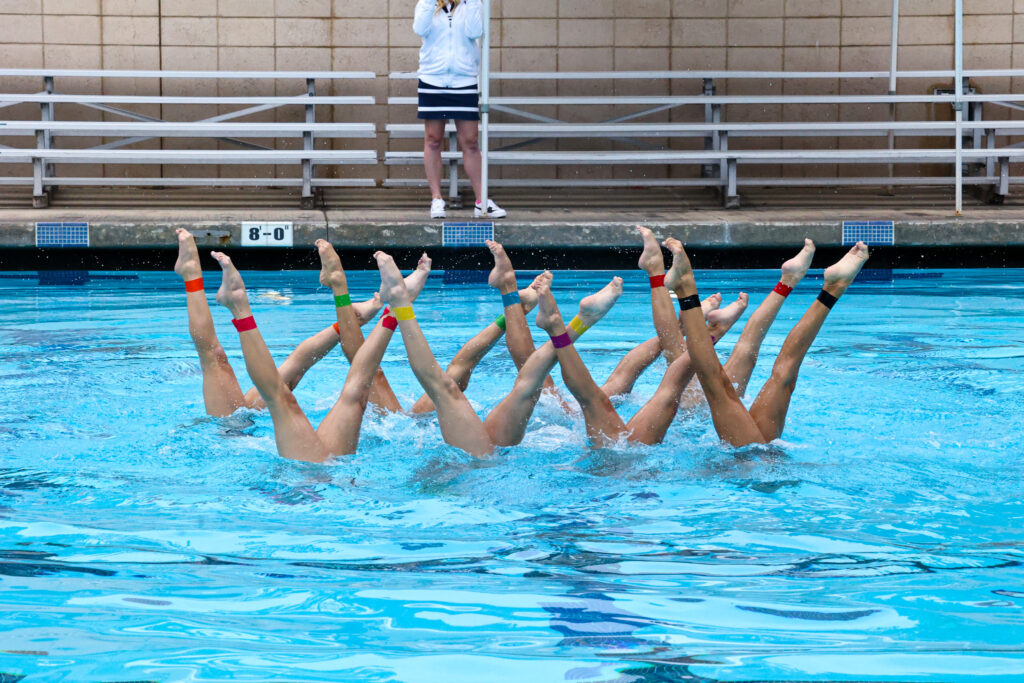
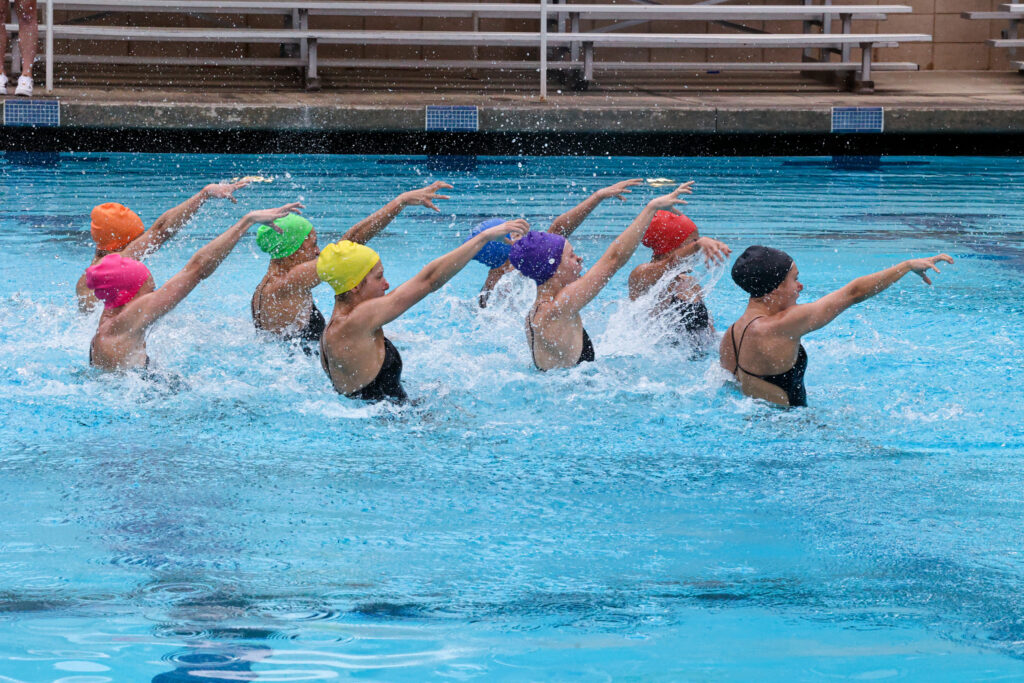
Testing wrapped up on day three with the second portion of the free team choreography assessment, for which several modifications were made to the routine learned the previous day.
The adjustments were designed to simulate the new demands of elite competition, where teams may need to alter hybrids or increase difficulty between preliminary and final rounds — sometimes even from one day to the next —, and to evaluate how quickly athletes could adapt under pressure.
“We wanted to see how fast and efficient they were [at] being able to perform right away after learning a new hybrid,” Teixeira said. “After learning new information, how much would they retain the details and be ready to go?”
At the conclusion of the event, and following detailed scoring and extensive video review of each athlete’s performances, 13 artistic swimmers were named to the U.S.’s official LA 2028 Olympic training squad: Anita Alvarez, Jaime Czarkowski, Ruby Remati, Natalia Vega, Daniella Ramirez, Nikki Dzurko, Kanako Field, Ghizal Akbar, Elle Santana, Emma Moore, AnaMaria Camero, Jacklyn Zhuge and David Llorente Fernandez.
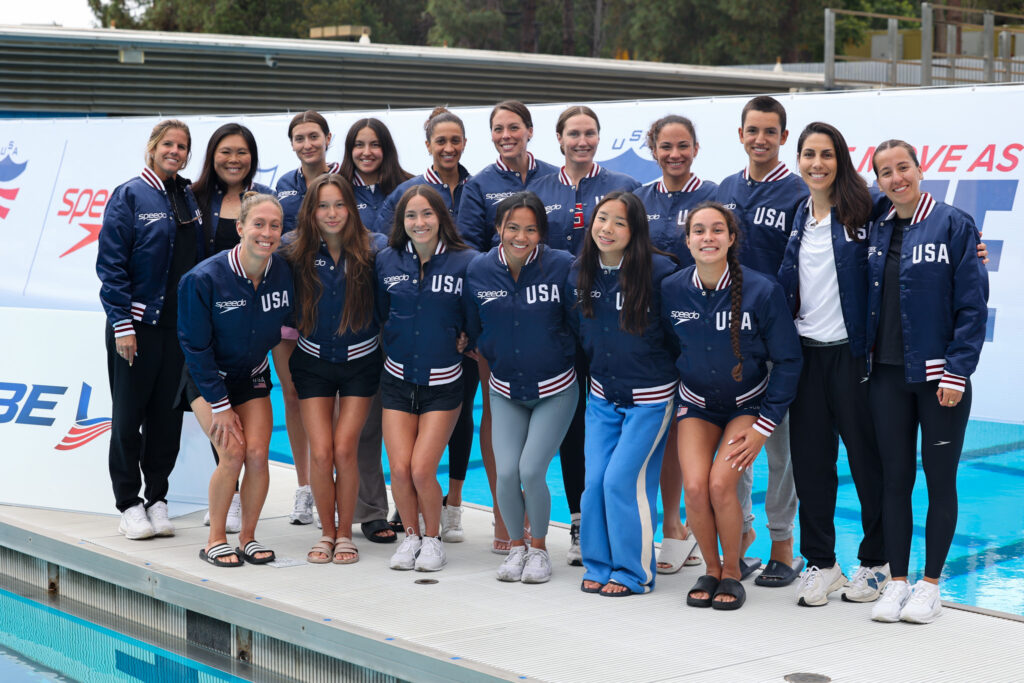
Remati and Llorente Fernandez were the only two to join the team — the other 11 selected athletes have been training with the Senior National Team throughout this season.
But while Remati is returning to the national team for a shot at a second Olympics after finishing her collegiate synchro career, this will be Llorente Fernandez’s first year competing at the international level.
“I’m the only one they added to the squad that was [completely] new, so it’s obviously very nerve-wracking to have to get to know all these people and make friendships, but I’m also really excited,” said Llorente Fernandez, who will represent the U.S. in solo and mixed duet at this season’s two remaining World Cups.
“These are the top people in the country. And I think that’s super motivating; I’m really excited to have to catch up to them, learn from them and compete alongside them.”
Five of the newly named Olympic training squad members, including Llorente Fernandez, will also compete on the Junior National Team that will represent the U.S. at this summer’s World Junior Championship.
While nearly half the squad is still young enough to compete in the junior category, the other eight athletes are further along in their careers.
“We have an age range right now from 15 to 29, and I’m the oldest,” said Anita Alvarez, whose selection marks a significant step towards a potential fourth Olympics.
“We’re in completely different stages of our lives, [with] different things going on. We have different day-to-day challenges, but I’m still learning from the 15 and the 16 year-olds, and they’re learning from me. It’s such a beautiful thing to see, and I think it’s such a valuable skill to have as we navigate our lives in the future.”
Alvarez also shared some insight she has gained over her 13 years on the national team.
“I left this weekend feeling super proud of where USA Artistic Swimming is right now. It was a really well put together trials and selection procedure, and I think that speaks to not just the staff and the leadership we have now, but to everyone that’s come before us,” she said. “I’ve been going to national team trials since 2010. We’ve been learning each year from the process, [and] it’s cool to have been part of [it] all of these years and to see how it’s come a long way.”
The newly solidified Senior National Team is now preparing to take their small routines to the fourth World Cup stop in Pontevedra, Spain at the end of May before travelling with the full team to the World Cup Super Final in Toronto, Canada in June.
As they finish off the last month-and-a-half of this season and begin looking ahead to the LA Olympic Games, strengthening team cohesion is one of the squad’s top priorities.
“Team culture and really trying to build the unity within this squad is top of mind for our coaching staff,” Abarca said. “I know that to reach the highest of highs, [the athletes] are going to need to be able to lean on each other, to work together, to stick by each other when things get tough. That’s something we’re really excited about, and we understand how incredibly important it is to enable our success for the long term.”
ARTICLE BY MARI FLORES
Photos: Kennedy Shriver / USAAS
If you’ve enjoyed our coverage, please consider donating to Inside Synchro! Any amount helps us run the site and travel costs to cover meets during the season.