
The 2026 European Junior Championships concluded in Munich with surprisingly only four member federations finishing on the medal table: the Individual Neutral Athletes, Spain, Italy and Belarus. The Individual Neutral Athletes and Spain were the only ones to medal in all 11 events.
The Russian athletes, competing under the Individual Neutral Athletes designation, absolutely dominated the competition overall, winning 10 of the 11 gold medals on offer and naturally claiming the Championships Trophy.
Their superiority was apparent throughout the week. Across all events, they consistently distinguished themselves through the overall quality of their performances. Beyond the difficulty, they combined exceptional execution, precision, technique, height, speed, synchronization and sharpness in a way that separated them from the rest of the field time and time again.
Their routines were cleaner, faster and more controlled, and even in the events where they did not have the highest DD, there was little doubt that they would emerge victorious.
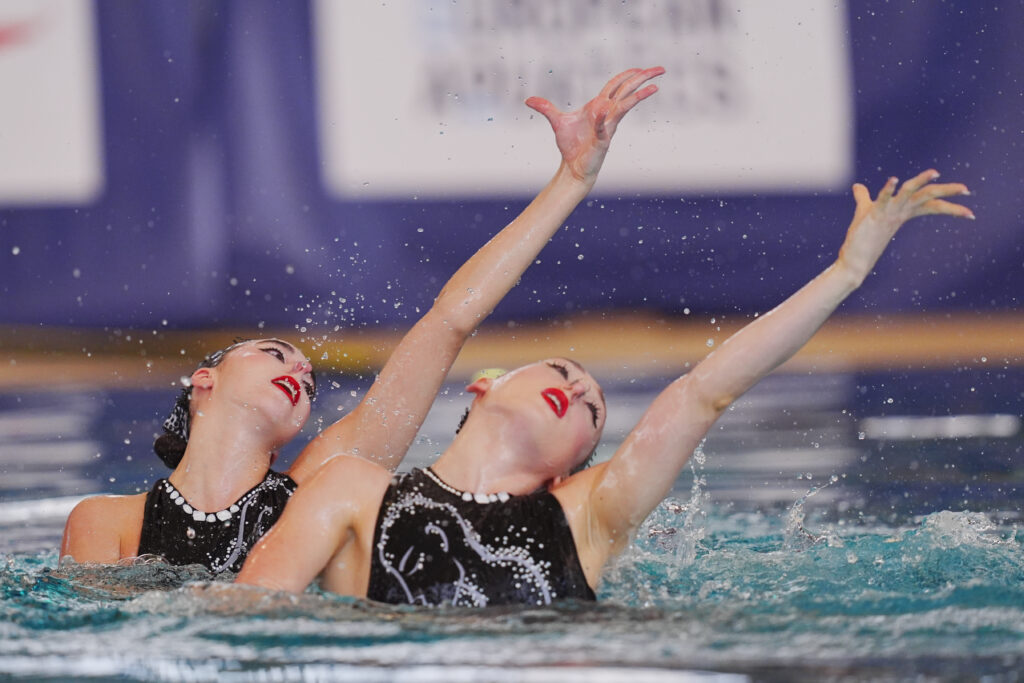
Among their 10 gold medals, one routine particularly stood apart. Kristina Chekhanova and Anastasiia Sidorina delivered one of the finest performances of the championships in the free duet with their “Two Elements of One Mechanism” choreography. The pair received a staggering score of 299.4832 in the final, finishing more than 27 points clear of the silver medalists.
Their routine carried a DD of 68.25, almost six points higher than any other duet in the competition. Originally unveiled at last year’s championships, when Sidorina claimed the European junior title with a different partner, the choreography has since been refined while simultaneously becoming even more technically demanding, yet all while abiding to the apnea limits.
Indeed, what’s truly remarkable is that this routine and score would be competitive with many of the world’s leading senior duets, despite being performed under the European Aquatics junior apnea regulations which limit free hybrids to 25 seconds. So, it seems that there is perhaps a way to remain extremely competitive, while also respecting athlete safety and well-being.
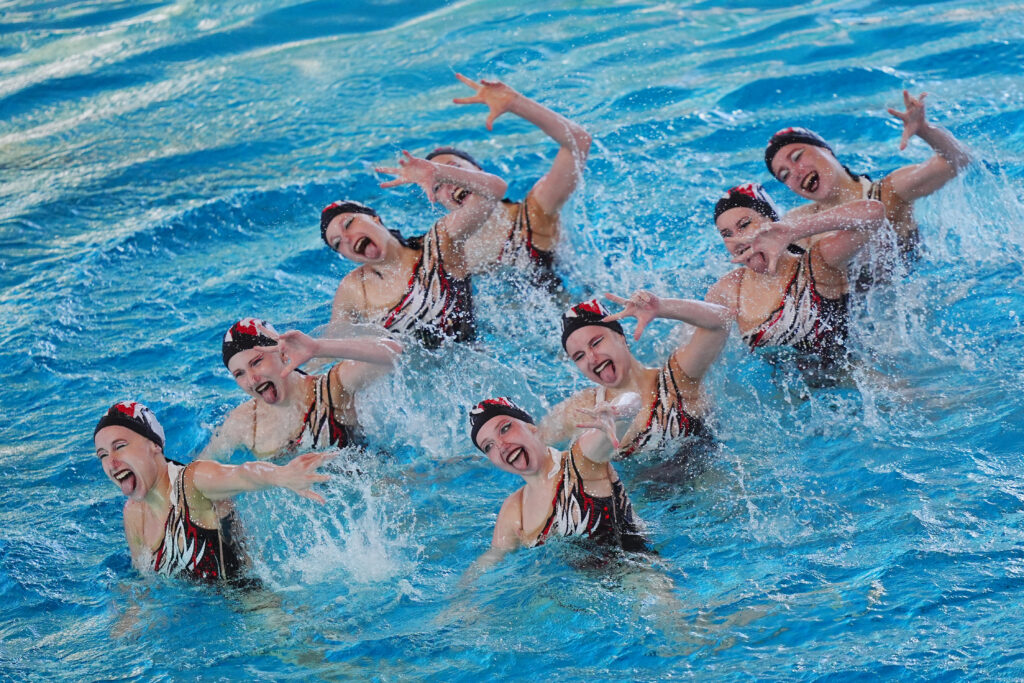
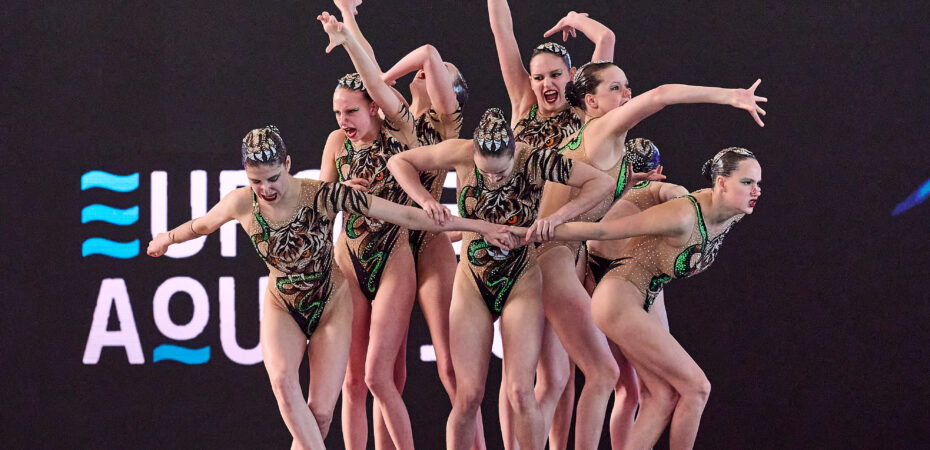
Overall, the Individual Neutral Athletes presented a wide range of themes and musical styles across the championships, from Aleksandra Zavialova’s playful “Seductress” technical solo to the intensity of the “Predators” free team and Ekaterina Shtatnova’s “Apocalypse Survivor” free solo.
Other routines explored more contemporary and modern concepts, including the Madonna-themed technical team, the acrobatic team set to Nirvana’s “Smells Like Teen Spirit”, or Zakhar Trofimov’s free solo set to AI-generated music for example.
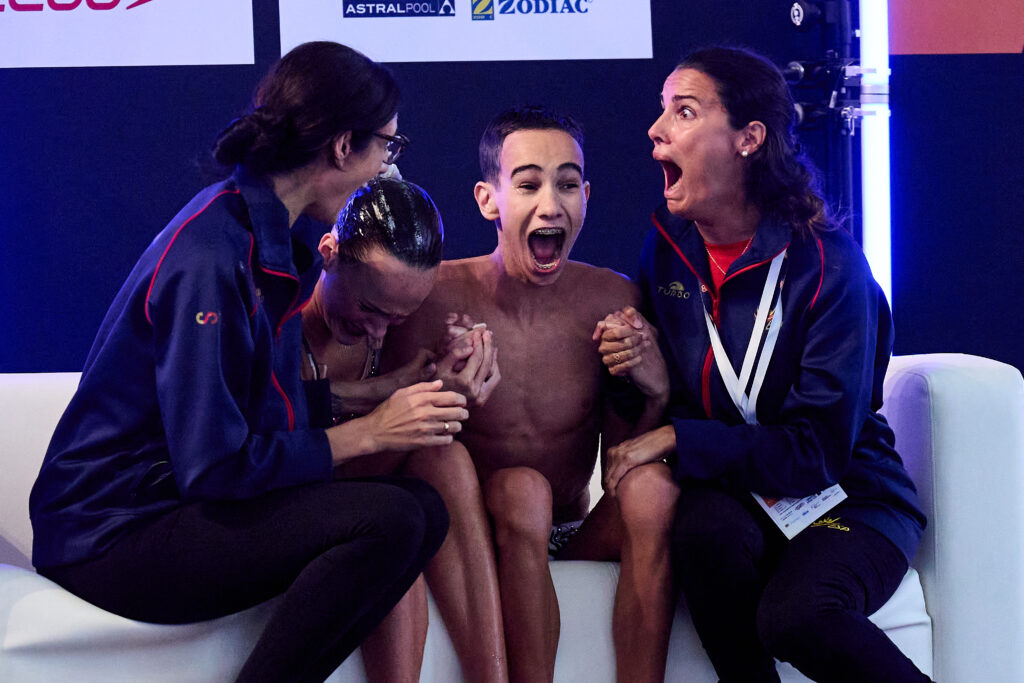
If one nation consistently challenged, and at times likely worried, the neutral athletes throughout the week, it was Spain. Although unable to retain the overall championships title after winning the previous four editions, the Spanish delegation nevertheless reached the podium in all 11 events, leaving Munich with one gold, eight silvers and two bronze medals.
Their lone victory came on the second day of competition in the free mixed duet, where Arlet Arnan and Eneko Sanchez claimed gold with 247.0509 points in their very first international appearance together in this event.
Swimming last, the Spanish pair presented an entertaining and energetic Hip Hop routine, combining strong technical content with an engaging performance quality that resonated with both the judges and the spectators.
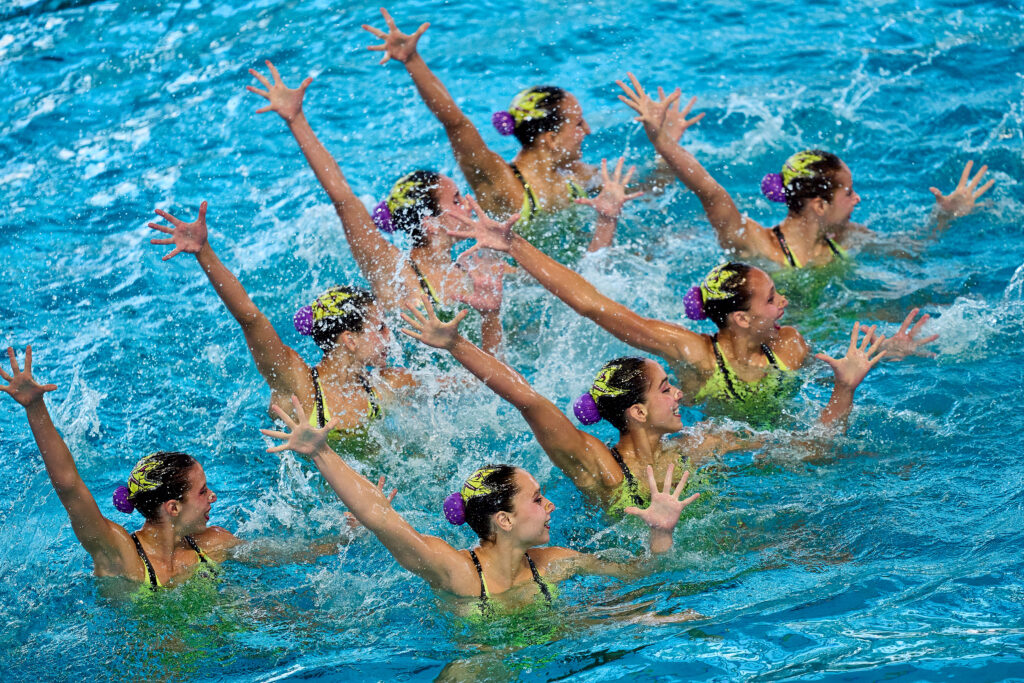
The Individual Neutral Athletes’ Alina Rumiantseva and Zakhar Trofimov, who entered Munich as defending European Junior Champions, had to settle for silver with their “Earthside Story”. A basemark on their opening acrobatic movement ultimately proved decisive, leaving them just over ten points behind the Spanish pair.
Sanchez was also among the standout individual performers of the championships. In the men’s technical solo, the 16-year-old came within 0.8818 points of gold after delivering an outstanding routine to Lara Fabian’s “Caruso.”
Carrying the highest DD in the field at 29.90, Sanchez combined excellent execution of the required technical elements with remarkable flexibility and a level of artistic interpretation rarely seen at this age. Sanchez leaves Munich with one gold, two silver and one bronze medals, confirming his arrival among Europe’s leading junior athletes.
Italy once again demonstrated the depth that has made it one of Europe’s most consistent artistic swimming nations. The Italians finished the championships with eight medals – two silvers and six bronzes – led by Ginevra Marchetti, and world and European medalist Filippo Pelati.
Pelati remained one of the continent’s leading male artistic swimmers, collecting three medals over the week across his three events. His solo routines once again stood out thanks to his great interpretation and presence in the water. Marchetti was equally impressive, finishing the competition with five medals, including three won on the same day, underlining both her versatility and consistency across multiple events.
Another encouraging performance for Italy came from 16-year-old Giulia Ottonello, who claimed bronze in the women’s technical solo with her “The Storm” routine, and while swimming solo internationally as a junior for the first time. The youngest member of the Italian delegation in Munich, Ottonello had already shown her potential by finishing fourth in solo (routine only) at the 2025 World Youth Championships.
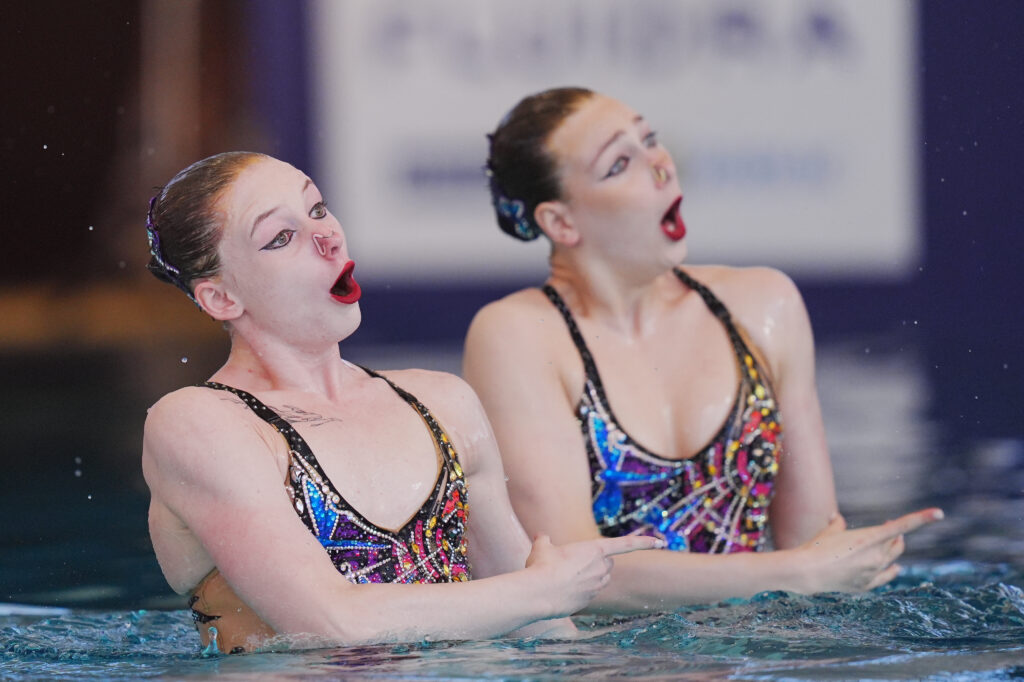
Belarus enjoyed a historic championships, bringing home three bronze medals. Anastasiya Dabravolskaya and Aliaksandra Mironchyk captured bronze in both duet events, securing the country’s first-ever duet medals at a European Championships across any age category.
Their free duet medal was particularly noteworthy. After receiving a basemark in the preliminary round and qualifying only seventh for the final, the pair produced a much cleaner performance of their “Puppeteer” routine when it mattered most, climbing onto the podium through a composed and technically solid swim.
The two are already familiar faces on the senior circuit, having competed together in several World Cups, and in last year’s World Championships with the team. Now, after more than six years swimming alongside one another, they are looking to establish themselves as one of Europe’s most promising duets.
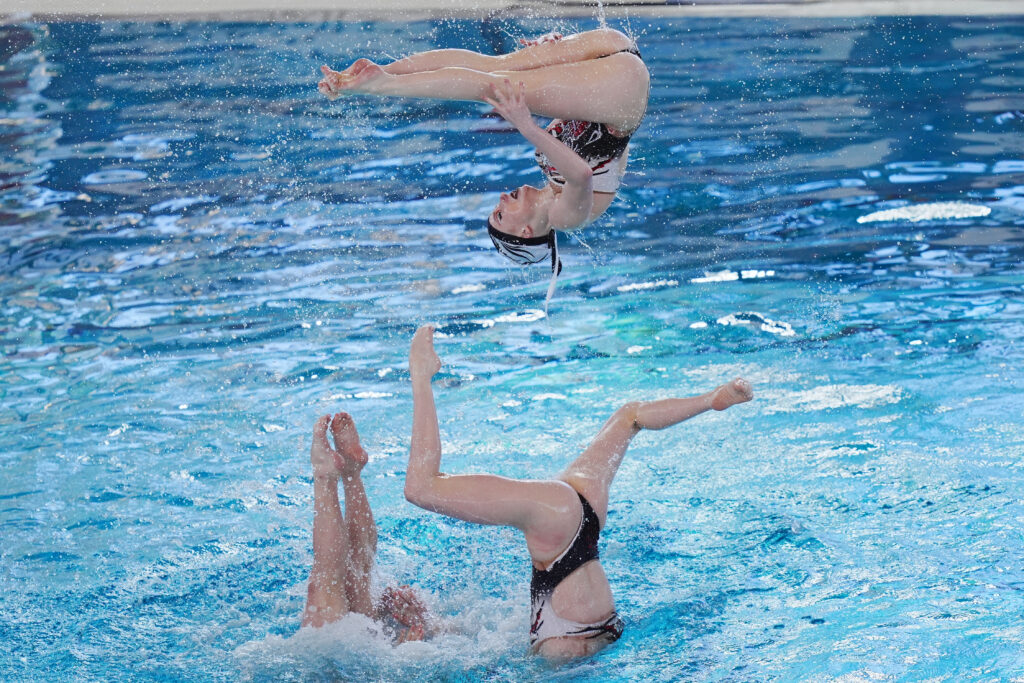
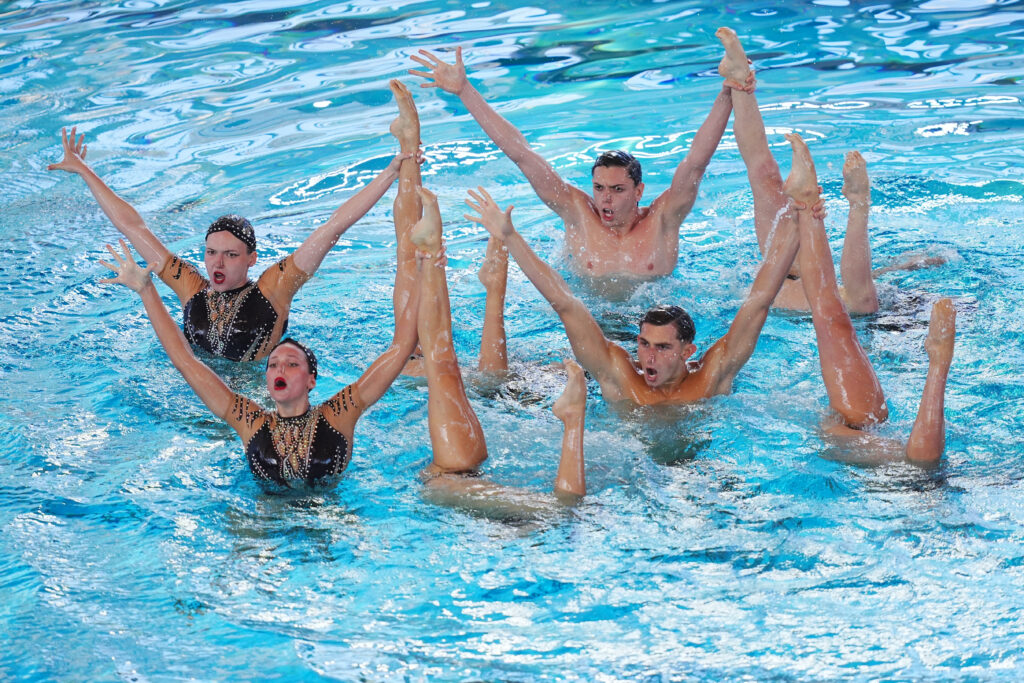
Belarus added another milestone on the final day by winning bronze in the free team event for its “Snake Dance” routine, the nation’s first team medal at the European Junior Championships. Their airborne acrobatic moves, also in the acrobatic team, are ones to watch particularly for the velocity of the featured swimmer in the air.
The squad came close to bronze in the technical team event before Italy’s protest was accepted, which overturned an eight-point penalty that had initially dropped them off the podium, moving the Italians ahead of the Belarusians.
Beyond the medal table, the most significant story of the week undoubtedly belonged to Türkiye. Selin Hurmeric and Ece Ungor, respectively 16 and 19 years old, finished fourth in all four of their events and ahead of several established European programmes.
Hurmeric, reigning vice-world youth champion, came closest to a medal in the technical solo, missing bronze by only 0.6141 points with her “Cats” routine, and only in her first European Junior Championships.
For Türkiye, the emergence of Hurmeric alongside Ungor is especially significant. Producing one athlete capable of reaching senior World Championship finals at just 16 years old, as Ungor did, already represented a major achievement for a nation still establishing itself among the sport’s traditional powers. Now, only a few years later, another exceptionally talented swimmer emerged, and together they are forming one of the most exciting up-and-coming duets heading into LA 2028.
Both athletes possess excellent technical qualities, but what perhaps stands out most is the attention paid to choreography, interpretation and storytelling. Choreographed by head coach Lacin Kokcay, their routines feel carefully constructed from an artistic perspective while remaining technically ambitious, and while still also offering a wide variety of moves and lovely transitions, in and out of the Technical Required Elements for example.
In the technical duet, the pair introduced an emotional routine performed to Ludovico Einaudi’s “Experience”. The choreography tells the story of two sisters navigating the breakdown of their family while relying on one another, and immediately established itself as one of the most memorable routines presented during the week.
In the free solo event, Ungor also unveiled a captivating choreography to the theme of “Autumn”, and notably received the third-highest artistic impression score of the final.
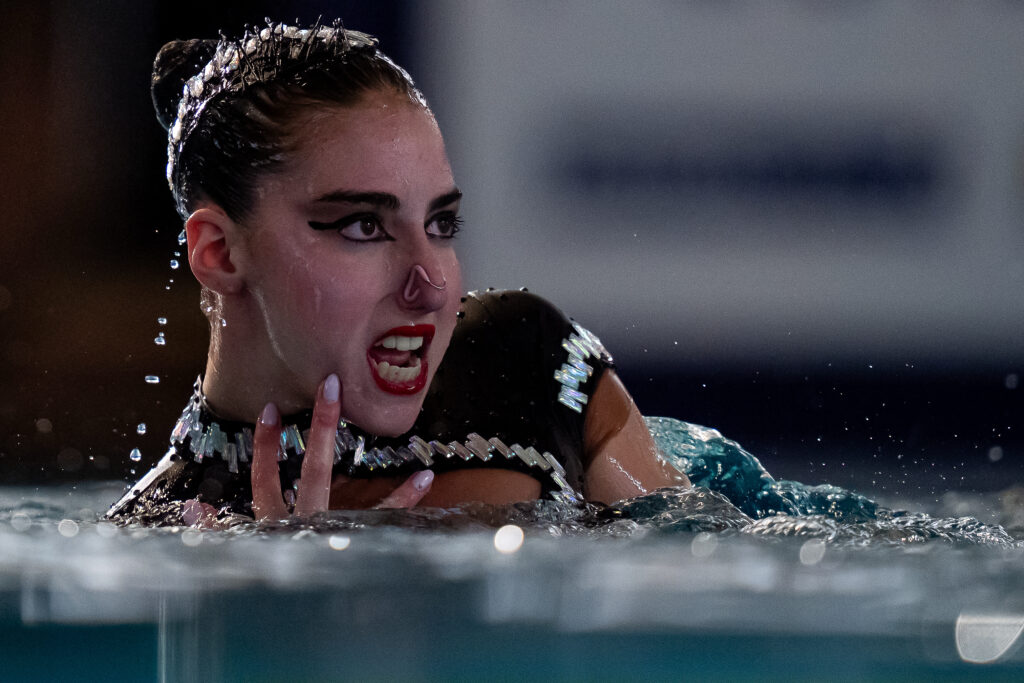
Poland also enjoyed another encouraging week, with the Kasprzyk triplets demonstrating impressive consistency across six events. They placed in the top 7 across their eight events, with a notable fourth place in the free mixed duet. That swim was particularly notable as Kacper and Lucja received two perfect 10.0 for the opening acrobatic movement, a fairly rare occurrence at this level.
Technically, the Polish swimmers continue to display a very strong foundation and consistently clean execution. As reflected in the scores, the next step in their progression will likely come through further development of their artistic impression.
Several other athletes also produced noteworthy performances in Munich. France‘s 16-year-old Nolan Fontbonne impressed in his first international solo appearances, displaying composure in the water and strong execution overall, most particularly in his technical routine.
Greece’s Anastasia Karagianni and Ilektra Rapti also caught the eye in the technical duet, delivering an energetic routine while maintaining strong quality across their elements from start to finish.
Meanwhile, Malta‘s Zea Montfort made history by recording the nation’s highest-ever result at a European Junior Championships, finishing sixth in the technical solo and seventh in the free solo.
For some athletes, attention now quickly turns to the senior stage, with the European Aquatics Artistic Swimming Championships in Paris starting on July 31. Many more will continue their junior season at the World Junior Artistic Swimming Championships in Budapest, Hungary, from August 12 to 16.
ARTICLE BY CHRISTINA MARMET
If you’ve enjoyed our coverage, please consider donating to Inside Synchro! Any amount helps us run the site and travel costs to cover meets during the season.
What was the Italys protest about?
Italy had initially received an eight-point penalty for touching the bottom of the pool so they ranked fourth at first. Their protest was accepted so they moved ahead of Belarus for the bronze.