
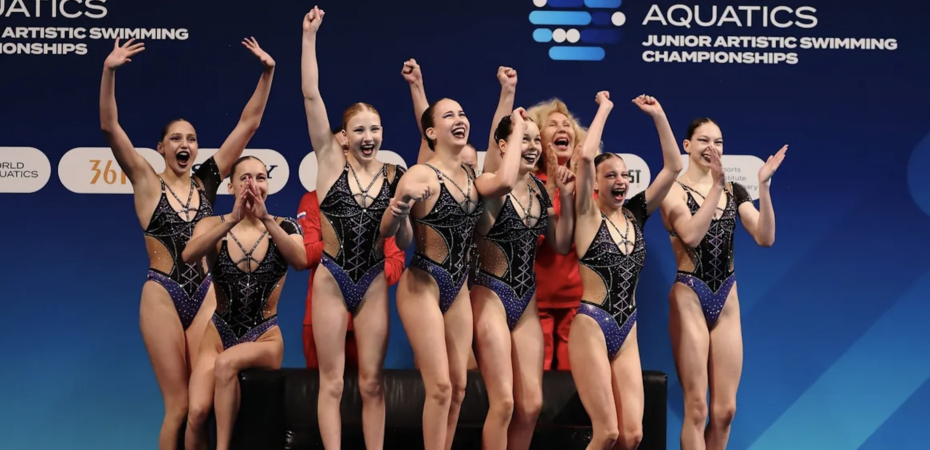
Back at the World Junior Artistic Swimming Championships for the first time in eight years, the Russian Federation wasted little time reasserting its status as the dominant force at this year’s edition in Budapest, Hungary, topping the medal table with nine gold medals and one bronze.
Following their overwhelming performance at the European Junior Championships in Munich earlier this summer, the Russians were once again in a league of their own across most of the events.
When they were clean, the gap was often substantial, with their routines standing out for their execution, technical precision, height, synchronization, choreography, and extraordinary clarity in every transition and pattern change.
All in all, the Russians consistently combined difficulty, although not always the highest, with an artistic impression and an execution level that proved extremely difficult to match.
Their most emphatic victory came in the acrobatic team, where their routine to Nirvana’s “Smells Like Teen Spirit” took gold by a remarkable margin of 29.1221 points in a very exciting final. They were also more than 16 points clear in the free team, where they presented their outstanding “Predators” routine.
Amongst the many notable performances from the nation, it is also worth noting that in the technical duet, the pair of Kristina Chekhanova and Anastasiia Sidorina finished with a total score of 300.1509, just two points lower than that of the senior duet at the European Championships.
The only Russian medal that was not gold came in the free duet. Reigning European Junior Champions Chekhanova and Sidorina had to settle for bronze after receiving a basemark on their opening acrobatic move.
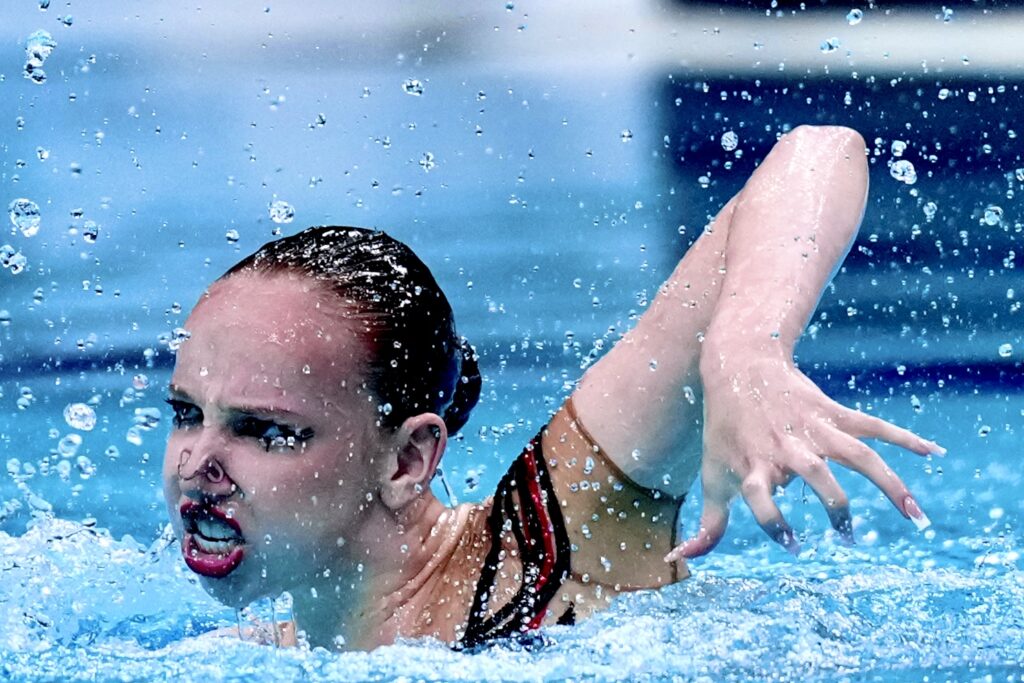
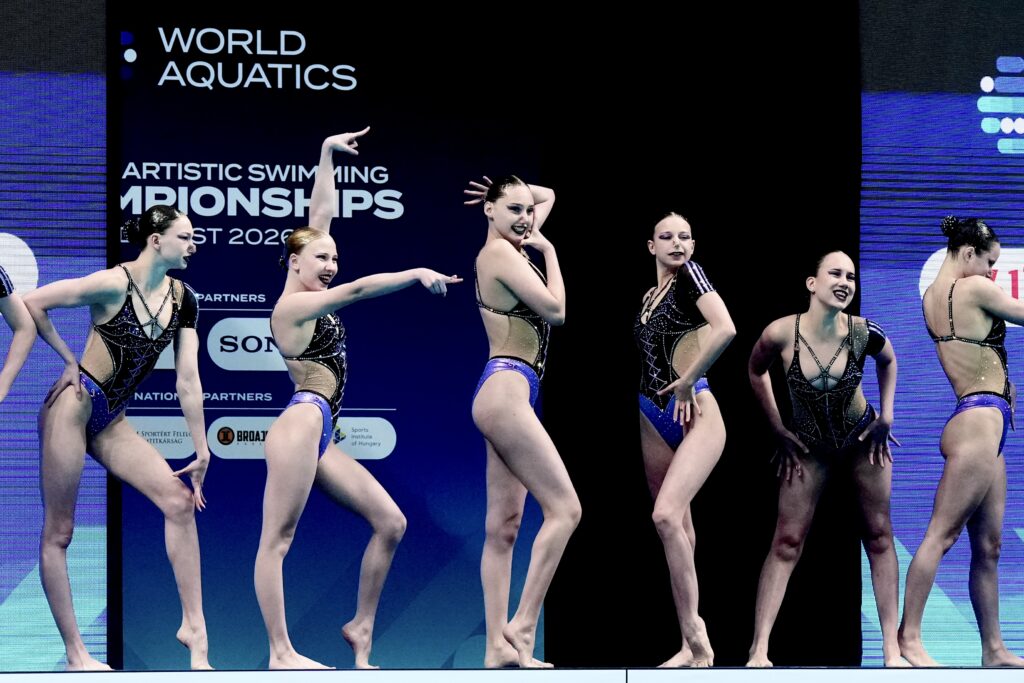
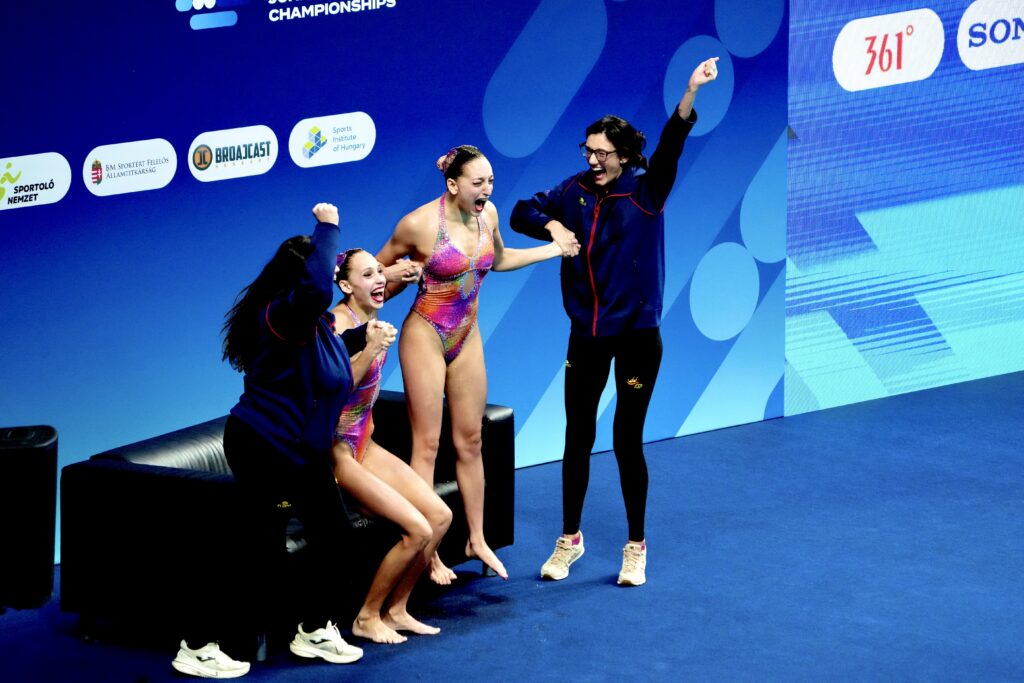
Spain provided the strongest challenge to Russia overall, finishing second in the medal table with an impressive 10 medals: two gold, four silver and four bronze.
The two gold medals came on the same day, with the nation first taking the free duet title through Naia Alvarez and Daniela Suarez. The victory marked Spain’s first-ever World Junior title in duet.
Swimming to Beyoncé’s “Diva”, the Spanish pair had already topped the preliminary round after Chekhanova and Sidorina received a basemark on their second acrobatic move. In the final, the Russian pair encountered another basemark, while Spain delivered a strong performance as the final pair to compete and claimed the title.
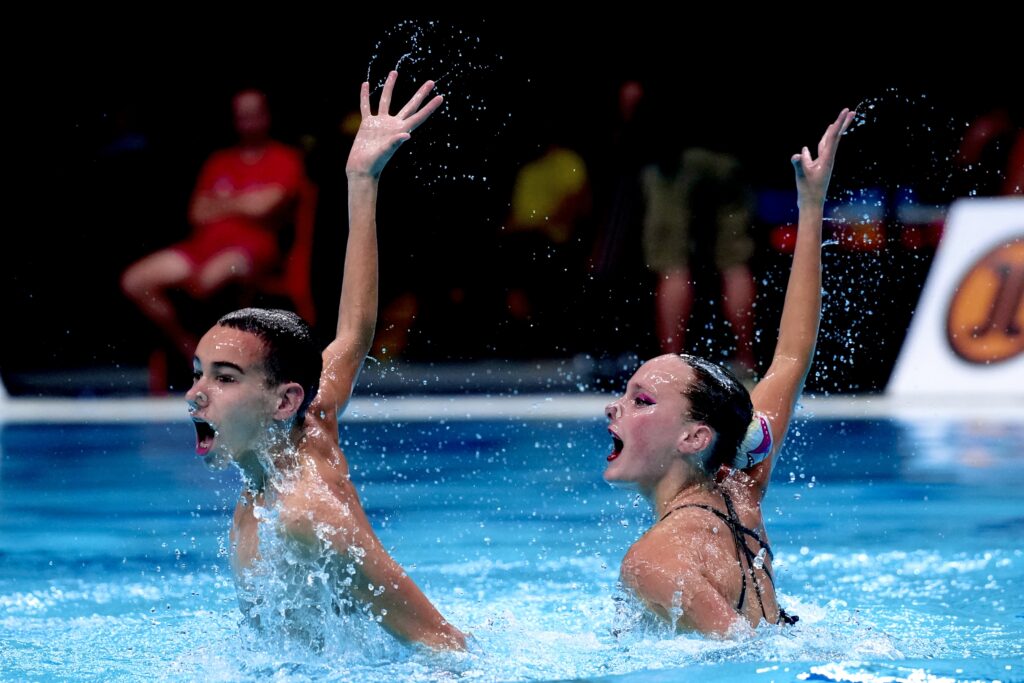
Only moments later, Arlet Arnan and Eneko Sanchez added another gold in the free mixed duet, giving Spain its first World Junior title in that event as well. The reigning European Junior Champions once again delivered when it mattered most, performing their “Step Up”-inspired hip-hop routine with the confidence and energy that had earned them the continental title in Munich.
Sanchez also came close to another gold in the men’s technical solo, taking silver less than one point behind Russia’s Zakhar Trofimov while holding a significant advantage in the Elements score.
The People’s Republic of China finished third in the medal table with seven medals, including five silver and two bronze.
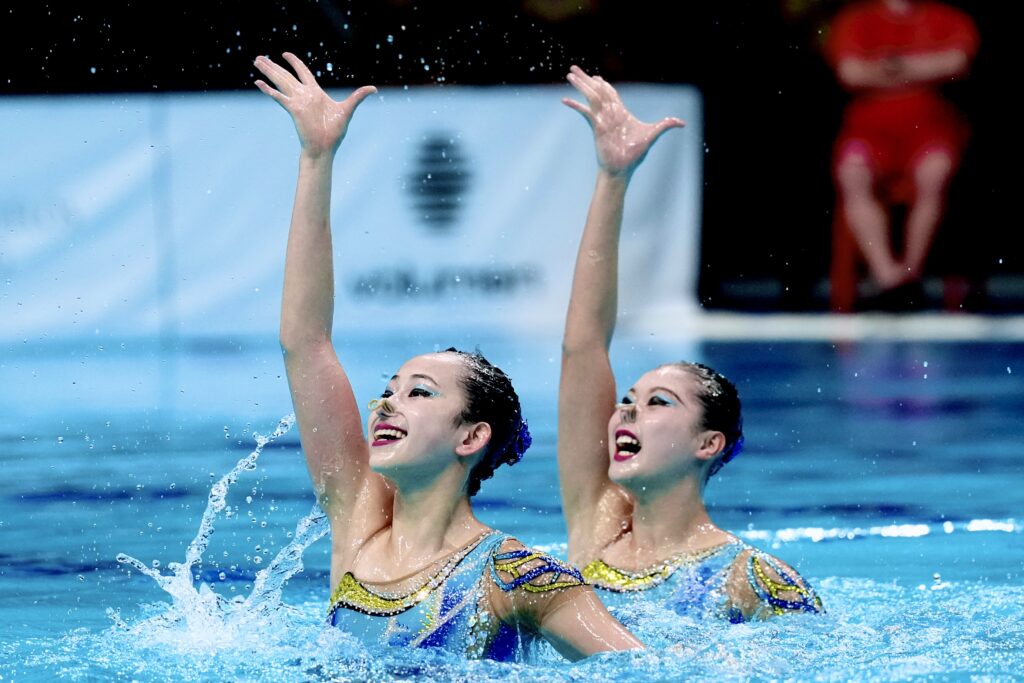
He Zhien and Zhou Kunyi were particularly impressive in the duet events, taking silver in both the technical and free duets. Their free routine to Florence + The Machine’s “Moderation” offered a somewhat different approach from the Chinese routines seen elsewhere in the competition, while their technical duet, “Growth Towards the Sun,” stood out for its strong technique and execution of the Technical Required Elements (TRE).
More broadly, China once again displayed its trademark precision, sharp movements, clearly defined patterns and consistently clean execution.
Kazakhstan enjoyed a historic championships, winning two silver and two bronze medals.
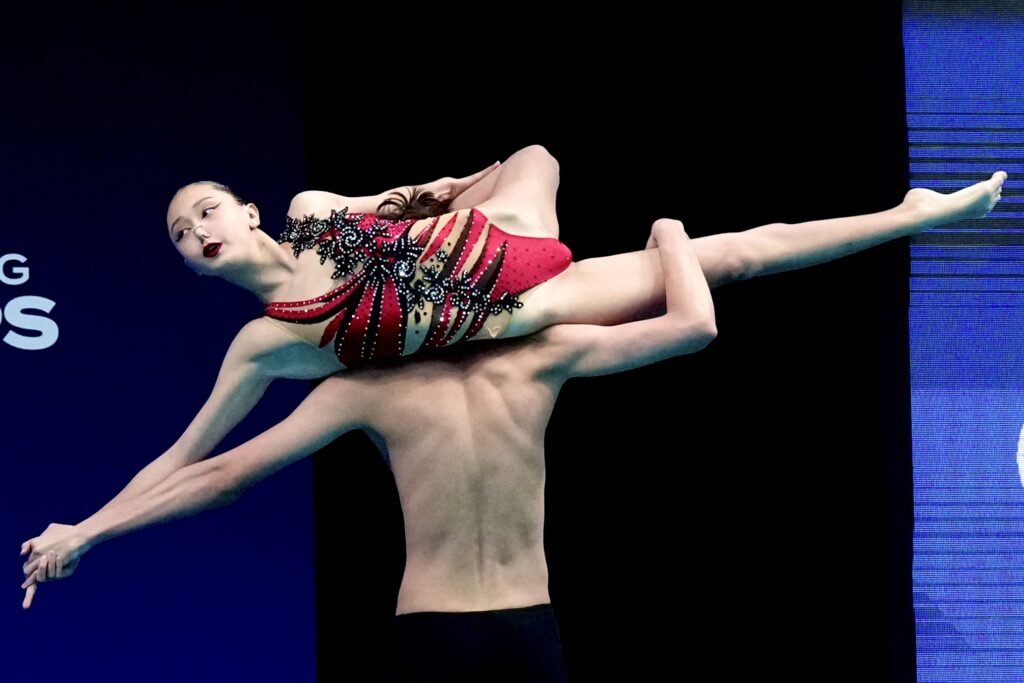
Yasmina Islamova and Aldiyar Ramazanov claimed silver in the free mixed duet with their “Notre Dame de Paris” routine. The two once again demonstrated Kazakhstan’s strength in pair acrobatics, as they performed two of their owns before receiving four 10s for their third acrobatic element.
The country also won silver in the acrobatic team, with a steady and solid “Beetlejuice”-themed routine. The medal was particularly significant as it marked the country’s first-ever team medal at a World Championships at any age group.
Finally, Viktor Druzin added two bronze medals in the men’s solo events.
Belarus made history in the acrobatic team, winning bronze for its first-ever team medal at a World Championships at any age group as well. The Belarusians had a very clean swim of their fun routine set to Michael Sembello’s “Maniac”, which proved enough to upset Spain, Italy and France, all of whom had finished ahead in Munich.
The bronze was particularly remarkable given the fine margins in the final, as Spain came extremely close despite receiving a basemark, finish 0.4242 points behind in fourth.
Japan’s only medal came in the free mixed duet, where Aitaka Heizo and Dodo Manami won bronze with their “Clowns”-themed routine. The music may have been anything but comforting, but the pair delivered a solid performance to secure Japan a place on the podium.
Although not quite reaching the podium this time, Greece was another team that made a strong impression in Budapest, building on the promise it had already shown in Munich. With more routines on the programme here, the Greeks looked polished and precise, with strong execution and engaging concepts throughout.
They finished fourth in both the technical and free team events, coming just two tenths away from the bronze in the former with their sharp and enjoyable “80s Aerobic Dance” routine.
The technical team final was actually one of the closest battles of the championships. Spain ultimately claimed the bronze, with Greece just 0.214 points behind and France a mere 0.0284 points further back in fifth. France actually recorded the highest Elements score of the three, but gave up ground in Artistic Impression, where Spain held the edge and ultimately secured the medal.
That narrow margin made France’s fifth-place finish particularly notable, as the nation has arguably never been closer to a World Championships team medal at this level.
There was also a welcome return for two-time World Youth Champion Macéo Vanhée-Dedieu for the country. He finished fourth in the men’s technical solo with his “Black Swan” routine, just 1.48 points from the podium for his first time in this event internationally. After a difficult season and several months away from training, simply seeing him back in competition was a highlight in itself.
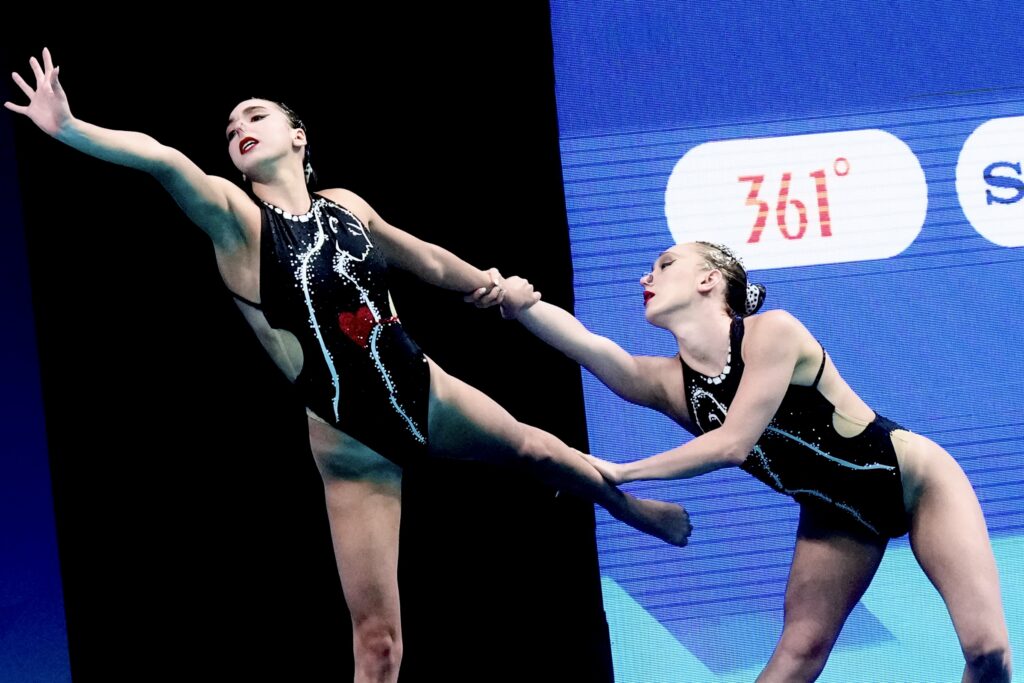
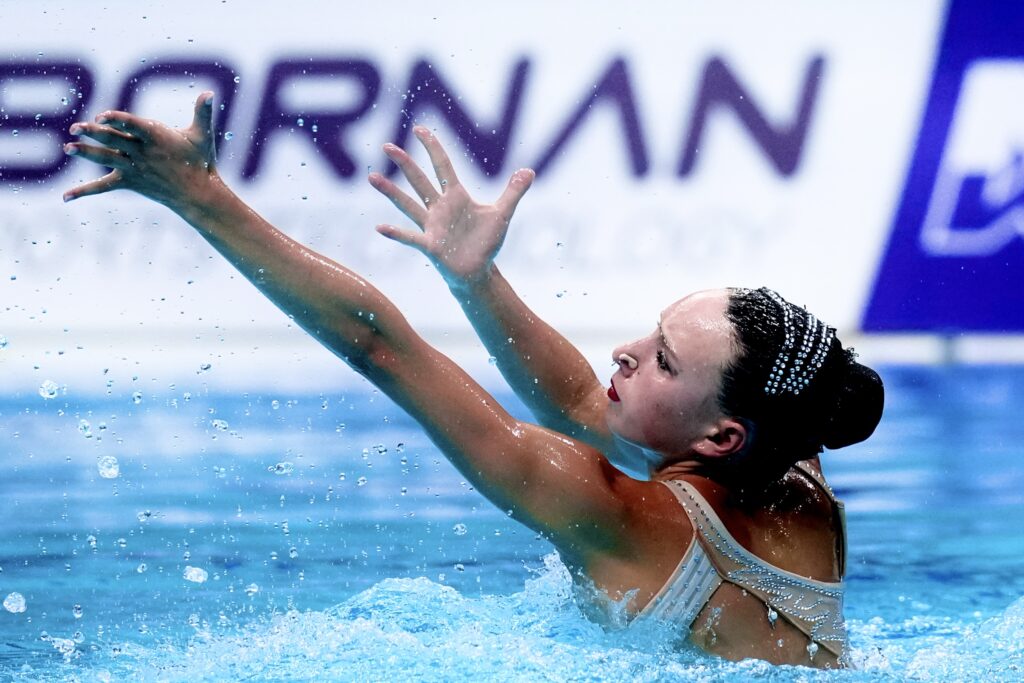
If Russia’s dominance was one of the defining features of the championships, the other was just how little separated many of the athletes fighting for the remaining medals.
The closest call came in the women’s technical solo, where Italy’s Giulia Ottonello missed the bronze medal by just 0.0042 points after a fantastic swim. Fun fact, she and Türkiye’s Selin Hurmeric were also the only two athletes in the final to receive at least one 9.0 or higher in execution for their Technical TREs, further highlighting the quality of their performances.
Türkiye enjoyed a historic and thrilling championships overall, with Hurmeric finishing fifth in the women’s technical solo and ninth in the free solo, while she and Ece Ungor recorded two top-eight finishes in the duet events. After four fourth-places in Munich, these results mark another significant step forward for the nation on the international stage.
Elsewhere, Chile made history with a fifth-place finish in the acrobatic team, while New Zealand reached its first-ever World Junior solo final through Teresa Sun, also marking the first solo final for an athlete from Oceania. Malta’s Zea Montfort was another standout, notably finishing sixth in the free solo, while Uzbekistan’s 14-year-old Darya Kochneva, one of the youngest athlete in the field, reached the top 12 in both events and is certainly one to watch for the future.
Budapest brought the World Aquatics season to a close, capping a busy year of international competition around the world. But the senior season still has more to come, with continental Games in a few weeks and plenty more artistic swimming before 2026 draws to a close.
ARTICLE BY CHRISTINA MARMET
Cover photo:
If you’ve enjoyed our coverage, please consider donating to Inside Synchro! Any amount helps us run the site and travel costs to cover meets during the season.