
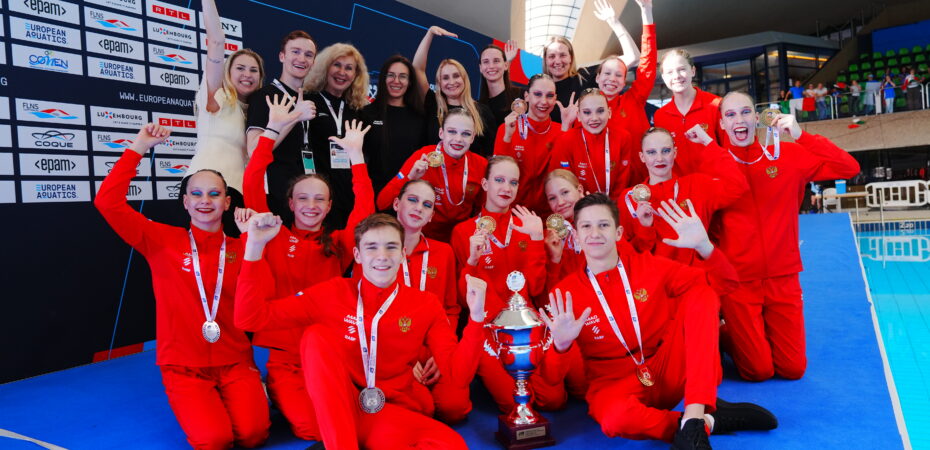
The 2026 European Youth Artistic Swimming Championships wrapped up in Luxembourg this weekend, and while the previous edition belonged to France and Spain, this one was defined by a single nation.
The Russian Federation returned to the European Youth Championships for the first time since 2021 and produced a performance that can only be described as outrageously dominant.
After missing the last two editions, the Russians arrived in Luxembourg after already a great showing at last year’s World Youth Championships, and somehow looked even stronger. Here, the nation entered all possible events, won all eight possible gold medals, completed a sweep of the women’s figures podium, and secured gold and silver in the men’s rankings.
The overall level was simply remarkable. The Russians appeared to be operating on a different level from the rest of the field, despite all athletes still being within the 13-15 age range (16 for boys), and making their international debut for the most part.
Dominika Aleksandrova and Nikita Skliarov opened the gold rush in the mixed duet with their light and beautifully executed “Romeo & Juliet” routine, scoring 333.8454. Anna Danilova then delivered one of the standout performances of the competition in the women’s solo, earning 378.7016 with her cheeky interpretation of Edith Piaf’s “Milord” and finishing more than 20 points clear of the silver medalist.
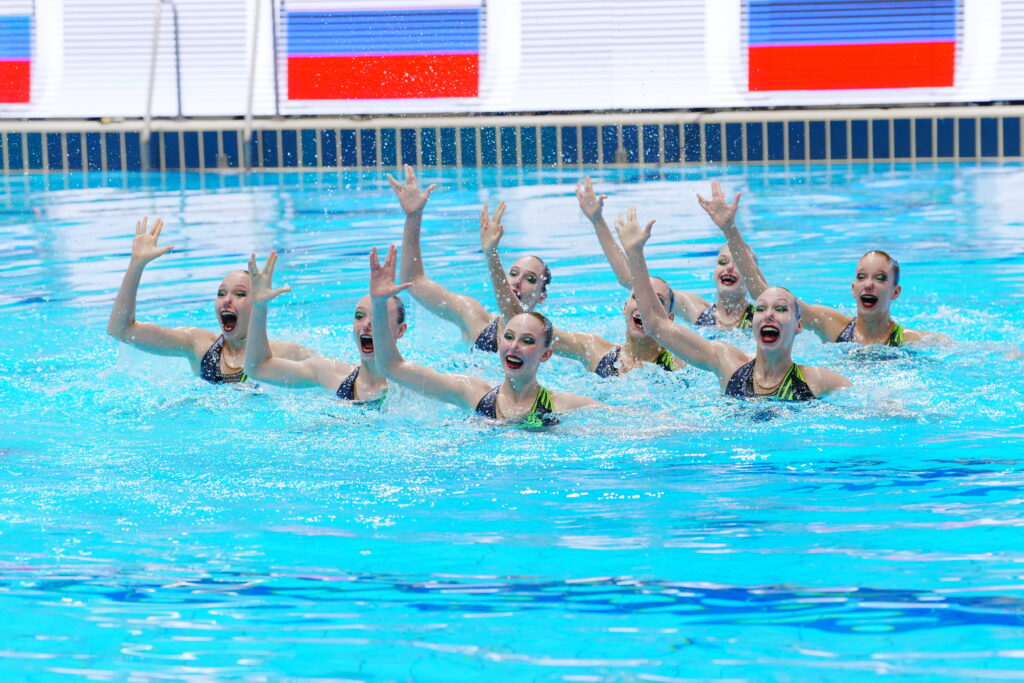
Russia’s new “Aliens” team routine was another highlight of the meet, combining exceptional execution, height and technique with clever, entertaining choreography to earn a total combined score of 400.4943 points, a lead of nearly 40 points over the second place finishers.
On the last day of competition, Emiliia Osiiuk and Mariia Pakhomova took the duet final by storm, finishing more than 30 points ahead of the field with their “Snakes” routine and a score of 302.2322.
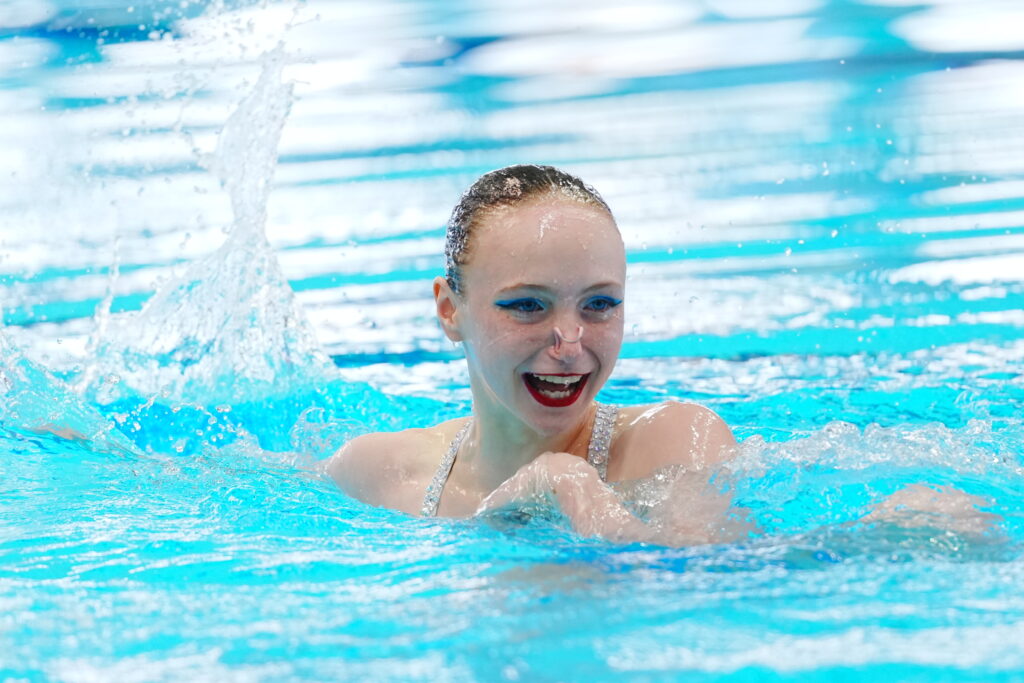
The men’s solo may have been the only event that could have made the nation slightly nervous, as Nikita Bodrov received a basemark on his final hybrid. Still, the 15-year-old had nothing to worry about thanks to this very strong figures score, which allowed him to ultimately claim gold with 344.5824 points for his “Little Things of Love” routine.
Longtime (and hardcore) synchro fans may remember him as the tiny half of this memorable “Crazy Frog” U12 mixed duet from 2018 that had made the rounds online back then. He has certainly grown since, and is now coached by seven-time World Champion Aleksandr Maltsev.
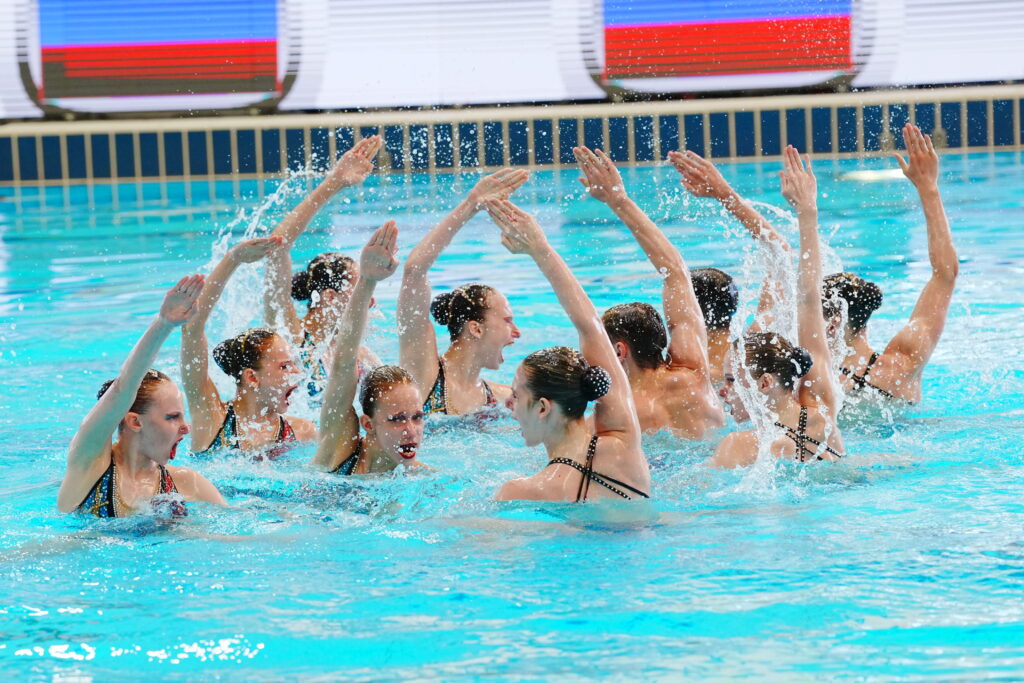
The team closed the championships winning gold in free combination, once more with a massive lead of over 38 points. With their “Shaolin Way” choreography that had earned them the world title last year, the Russians were again outstanding in this routine that featured crystal-clear pattern changes, superb height, precise movements and sharp acrobatics – the first one receiving two 10s – on the way to 267.6653 points.
This also marked a significant milestone for the nation as, for the first time, Russia included male athletes in a team routine at a major international competition, across any age group. Not one, but two young men – Bodrov and Skliarov – took part in this performance, offering a glimpse of what could be a very bright future for them both.
Unsurprisingly, Russia’s dominance extended to figures. Stanislava Kozlova, the reigning World Youth Champion, successfully defended her place at the top with an astonishing 87.3636 points, which is exactly the same score she earned to win the world title last year.
Even more impressive, the 14-year-old achieved that mark under European Aquatics’ four-figure format rather than the two-figure system used by World Aquatics. Kozlova finished nearly three points ahead of the next-best Russian athlete and looks every bit a star for the future.
Teammates Anastasiia Dukova and Anastasiia Mokshina claimed silver and bronze respectively, while Bodrov and Skliarov earned gold and silver in the men’s rankings. Fun fact, Kozlova and Skliarov used to swim mixed duet together domestically in the U12 category.
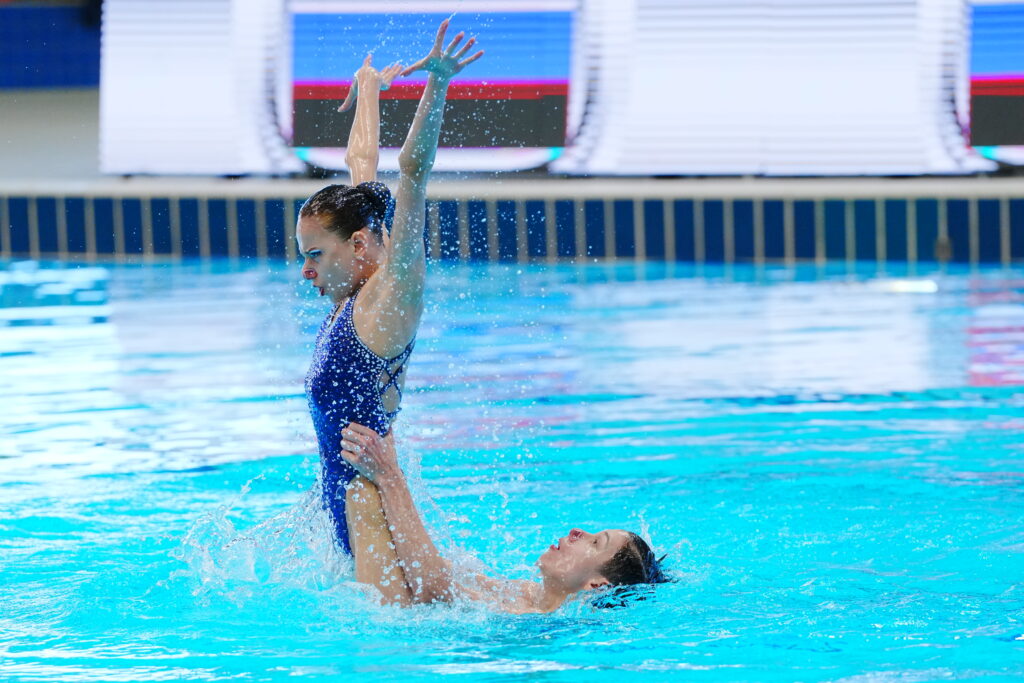
Spain once again proved itself one of the continent’s strongest youth programs, leaving with four silver medals from these European Youth Championships.
Abril Caballero was at the center of much of that success, earning silver in solo with her “Revolt” routine and adding another silver in duet alongside Julia Villalonga. The pair rebounded impressively after a basemark in preliminaries left them in fourth place, producing a strong final swim with their “Vikings” routine to move into second place. Caballero was also the highest-placed non-Russian in figures, finishing ninth.
The mixed pair of Lola Aparicio and Mikel Mercedes took silver with their “Angels and Demons” choreography, while the nation’s new “Beyoncé” free combination closed the competition in entertaining fashion. Despite a basemark on the final hybrid, the fun and energetic routine secured another silver medal and provided a fitting finale to the championships.
France, which stood at the top of the medal table last time out with eight medals and three golds, experienced a somewhat mixed championship comparatively, but still demonstrated the depth of its youth pipeline with three medals. The nation surely deserved the top award for having the best fan section and very committed dads, however.
The French earned their first silver in the team event with their well-interpreted “Jungle” routine, which had already claimed bronze at the World Youth Championships last year.
In the men’s solo, 13-year-old Dylan Freitas won silver as well, actually posting the highest routine score of the event with his “Bohemian Rhapsody” choreography. In the absence of teammate and reigning World and European Youth Champion Macéo Vanhee-Dedieu, Freitas seized his opportunity and particularly impressed in this event.
The duet twins Julia and Magdalena Domin, reigning national champions in both youth and junior categories, claimed bronze with their “Cats” routine. After placing second in preliminaries, a basemark on their opening hybrid in the final proved costly, but the sisters still held on for a well-deserved podium finish.
Greece also had a successful championships, collecting three bronze medals and leaving a strong artistic impression throughout the competition. 14-year-old Melina-Rafailia Kasviki delivered a delightful solo performance to Barbara Pravi’s “Voilà,” earning bronze in her first international appearance as a soloist. She already represented Greece at last year’s World Youth Championships in duet and team events, and displayed remarkable presence here for such a young athlete.
Stylianos Koukouselis Fouskis also earned bronze in the men’s solo with his entertaining Elvis Presley-themed routine. Already a member of Greece’s senior national team and fresh off competing at the World Cup in Pontevedra, he looked quite comfortable and confident in this routine.
Greece’s third bronze came in the free combination with its “Egypt” routine, another swim that showcased the strong artistic identity seen across the Greek delegation all week.
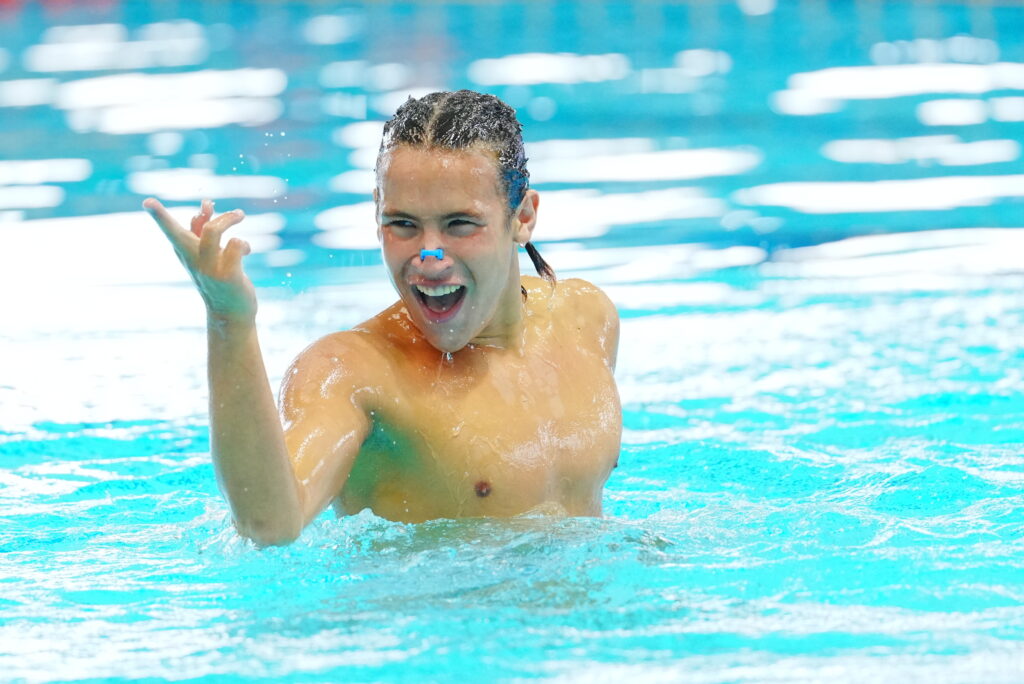
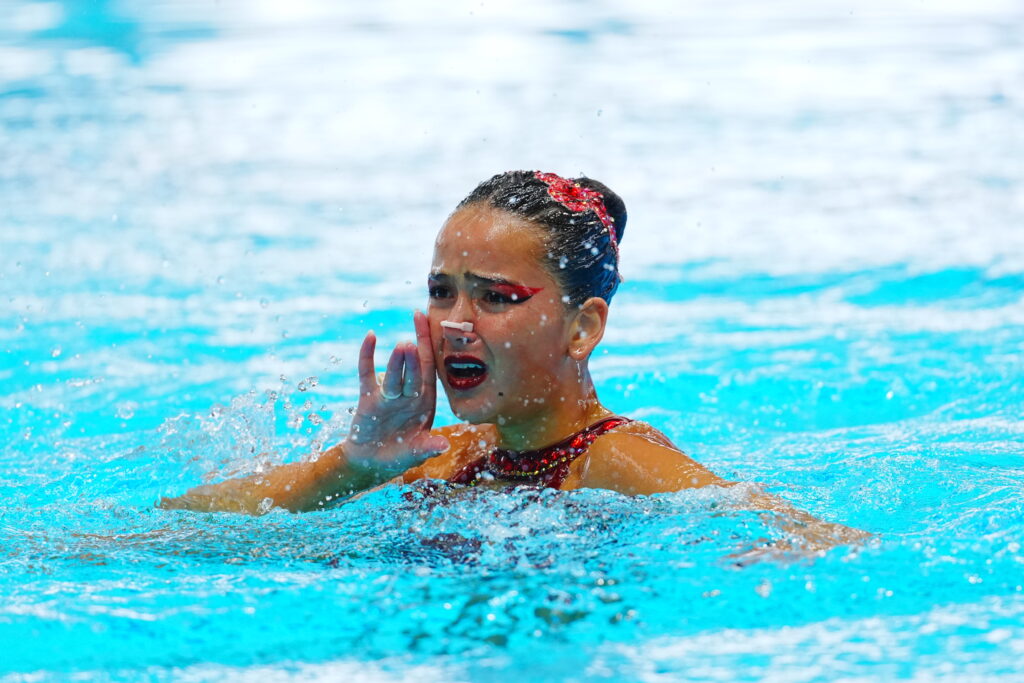
Poland continued to demonstrate the strength of its youth program that has delivered notable results for several years. Kacper Kasprzyk earned bronze in the men’s figures before partnering Amelia Mianowska to another bronze medal for the country in the mixed duet thanks to their “Spanish Dance” routine.
The lone medal for Italy came in the team event, where they came in as the defending European Youth Champions. The nation had a fairly difficult preliminary swim featuring three basemarks on a massive 63.375 DD and a sixth-place ranking. For the final, the Italians had reduced their difficulty to 61.075 – still the highest of the field – and thankfully produced a much cleaner swim to secure bronze.
However, overall, Italy’s strategy of pursuing extremely high difficulty values across essentially every event failed to pay off. It was probably the most brutal for the duet, which had the highest DD at 55.05, as it suffered four basemarks, dropped to 17th and missed the European final altogether. Similar stories followed in the solos, mixed duet and free combination events, with again costly basemarks and missed podium opportunities despite overall strong figures scores.
Beyond the medal table, Estonia and Croatia both produced encouraging and noteworthy performances.
Estonia continues to emerge as one of the most exciting developing nations in European artistic swimming, led by head coach Anastasiia Rudkovski. The growth of the country has been remarkable, as only a few years ago, it had virtually no presence in the sport. In Luxembourg, however, it fielded athletes in every single event, reached every final and recorded top-10 finishes across the board.
Among the standout performers was 13-year-old Aljona Gornieva, who secured an impressive sixth-place finish in solo with her “Midnight Veil” routine while also placing 27th in figures. Still only in her first year of eligibility in this age group, she is undoubtedly one to watch for the future as Estonia continues to flourish on the international stage.
Croatia, meanwhile, showed a consistency that was among the most impressive stories of the week. Under the guidance of long-standing coach Ivana Lukacs and former Slovenian international Nika Seljak, the Croatian athletes reached every final they entered and completed the entire competition, preliminaries included, without a single basemark. They finished ninth in solo, sixth in duet and sixth in free combination, where they were one of only two teams to deliver a clean swim.
These European Championships showcased much of what makes youth artistic swimming so exciting: emerging stars, unexpected and playful routines, breakthrough performances and a new generation eager to make its mark internationally. But above all, these championships belonged to Russia, whose return to the competition culminated in a clean sweep that will rank among the most dominant performances in the event’s history.
ARTICLE BY CHRISTINA MARMET
Cover photo: European Aquatics
If you’ve enjoyed our coverage, please consider donating to Inside Synchro! Any amount helps us run the site and travel costs to cover meets during the season.