
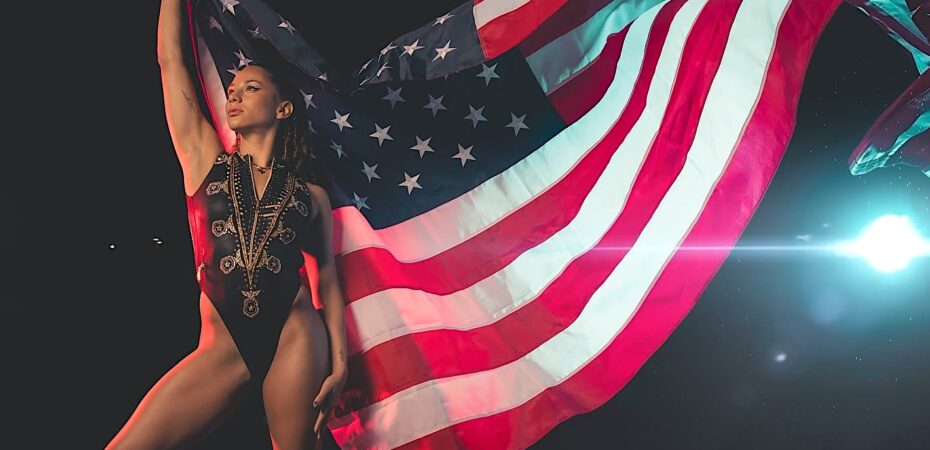
Millions of people know Daniella Ramirez as the artistic swimmer behind the “ear peely” videos.
In some of her most popular clips, Ramirez films herself peeling dried gelatine from her ears after a swim, or “taking out her artistic swimming hair.” In others, she taps her fingers on her slicked-back bun in ASMR-style videos, or simply shows some clips from daily training.
On TikTok and Instagram, the videos regularly climb into the millions of views – the biggest soaring past 167 million –, introducing new audiences to artistic swimming through the sport’s strangest little details that most within it are so used to.
“If this is what’s gonna get eyes on artistic swimming, I don’t care how we do it,” she said. “If this is the window into our super cool world, if people find these interesting, and as a result start talking about the sport or show interest in it, then great, I will keep posting.”
Behind the algorithms and ASMR clips, though, is one of the defining athletes of Team USA’s modern era.
Ramirez is an Olympic silver medalist, a nine-year national team veteran, and a swimmer whose career has unfolded through both the ups-and-downs of the American program and one of artistic swimming’s most dramatic transformations.
Through every stage of her journey, one idea has remained constant.
“It was always about having fun,” the 24-year-old said. “Of course, it’s necessary to work hard if you want to be at this level. But to have fun during the journey is just as important. When I’m having fun at practice, nothing else matters. And when I’m performing and I’m having fun, it’s the highest of highs. There’s literally nothing that can beat it.”
Raised near Miami, Florida, Ramirez is a third-generation artistic swimmer. Her grandmother competed back when the sport was still called water ballet. Her mother swam for the Venezuelan national team, before later competing for The Ohio State University. Her older sister Denise also swam collegiately at Lindenwood University. As a former diver, her father was well immersed in the aquatics world as well.
Ramirez’s mother coached both her and her sister for years, so she spent most of her early childhood immersed in the now-familiar rhythm of practices, competitions and long days on the pool deck.
“I just wanted to be at the pool as much as possible,” she said. “Watching my mom coach my sister, who was doing well, I realized I really wanted to beat her at what she was doing. That’s what got me into the competitive side of it, and wanting to do it more seriously.”
Growing up, though, the Olympics were not yet the dream.
“Again, I really just wanted to have fun,” she said. “My whole existence as a child was just like, where can I have the most fun and cause the most havoc?”
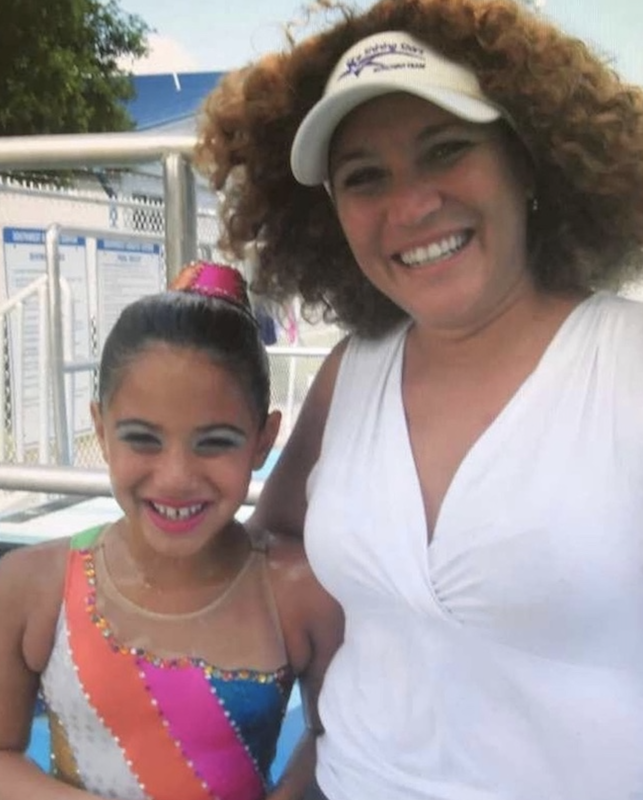
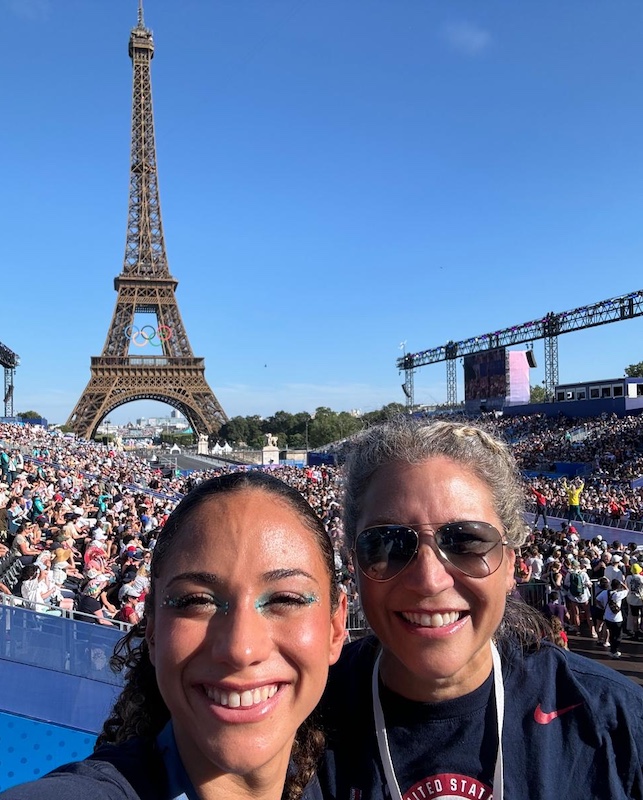
As teammates around her began pursuing national team opportunities, Ramirez started imagining that path for herself as well. After eventually making the USA 13-15 B Team, she watched Anita Alvarez and Mariya Koroleva compete at the 2016 Rio Olympics and experienced what she still describes as an “epiphany.”
“Oh my God,” she remembered thinking. “That would be the biggest and most amazing way to perform. I imagined if I had all of my closest friends on the biggest stage competing with me, and thought that would be the craziest, most incredible thing.”
A year later, Ramirez tried out for the senior team with very little expectations, and made it. Although she had just gotten accepted into her long-coveted Arts Charter School, the then-15-year-old decided to pursue artistic swimming full time and moved by herself across the country to the San Francisco Bay Area.
“I had a host family that was gracious enough to let me stay with them,” she said. “Everything was very scary and very new to me at first. All of the sudden, I was alone in a house with people that I didn’t know, in a strange land with no Hispanic food (laughs). But after a while, it didn’t feel so scary, because I knew that I was gonna have fun in this new chapter.”
The adjustment naturally came with challenges. Away from her family and no longer attending school in person, Ramirez suddenly found herself living almost entirely around training while trying to adapt to the demands of the senior national team, an environment she acknowledged took time to figure out.
Although she admits those years were difficult at times, she now sees them as foundational not just for her athletic career, but for who she became as a person.
These also coincided with a fairly unstable period for USA Artistic Swimming. When Ramirez first joined the senior national team in the fall of 2017, the United States was still searching for a way back into international relevance.
After a fifth-place finish at the 2008 Beijing Olympics, the country had failed to qualify a full team for both the 2012 and 2016 Games. While the Americans continued reaching World Championship finals, the program was far removed from the podium-contending powerhouse it had once been.
Those years had also been marked by numerous coaching changes, restructuring and uncertainty as the organization attempted to rebuild itself. Ramirez’s generation became part of a broader effort to modernize the program and close the gap with the rest of the world; often learning in real time as the team searched for a new identity and training model.
Everything began to shift with the arrival of head coach Andrea Fuentes at the end of 2018.
For Ramirez, Fuentes helped redefine what artistic swimming could look like, not only technically, but creatively. More importantly, she changed the way Ramirez saw herself as an athlete.
“I think she really opened my eyes to what my strengths already were,” Ramirez said. “Even if they were not fully developed yet, it was mind-blowing for me to see what my own potential could be. Nobody had ever told me, ‘Oh, you’re good at choreography,’ or that me being able to do a back flip was a good thing.”
At the same time, Fuentes helped Ramirez find a balance between joy and discipline, especially as the team was making a run to qualify for the Tokyo Olympics.
“She finally taught me where the middle was, of having fun but also doing the hard, hard work of what artistic swimming really is,” Ramirez said. “Once she came into the picture, it was like, ‘Okay, I can see myself doing this for a long time, because I am really, really enjoying this’.”
The U.S. did not ultimately qualify for the Tokyo Games, a moment Ramirez still recalls as “heartbreaking.” After five years on the national team, she said that moment forced her to consider whether she really wanted to continue, and what she was really getting out of it.
In that period – and through many difficult moments throughout her career – Ramirez often leaned on the perspectives of her parents, who have only ever missed a handful of her competitions. Her mother, in particular, consistently reminded her that artistic swimming could never just be about results.
“She was always like, ‘If you’re not having fun, something’s wrong. Reevaluate,’” Ramirez recalled. “‘None of it is as serious as you think. It’s just sport. Go out there and have fun, you have nothing to lose’.”
Over time, that philosophy became central to Ramirez’s relationship and experience with the sport.
“Synchro is just that, it’s a sport,” she said. “And the lessons it teaches you go way beyond winning an Olympic medal or any other accolades. It’s about what you learned, and what you did with your time.”
So Ramirez chose to stay for another Olympic cycle, understanding she had a lot more to give and a lot more to learn: “It was like a complete factory reset. Let’s just start again.”
That decision coincided with major changes to Team USA, which relocated to Los Angeles and started preparing for a completely new era of artistic swimming.
As the sport underwent sweeping rule changes after the 2022 season, the United States embraced experimentation. Practices became collaborative, as coaches and athletes brainstormed acrobatics, transitions, hybrids and choreography ideas together. Nothing felt off-limits.
“Andrea loves a challenge,” Ramirez said. “Once the rule changes happened, it was the most amazing opportunity for us to try new things, push the envelope and be innovative. Even if one of us was like, ‘What if we pretended to be dogs for this?’ [Andrea] would let us try it. Sometimes it worked out and sometimes it was like, ‘Wow, that looks really dumb. Let’s try something else.’
It was so fulfilling to have a coach let us explore every avenue to the end. That really taught me a lot about the way that creativity works and that sometimes it’s the most unexpected, or simplest, things that look the best.”
And somewhere amid the constant trial and error, Team USA slowly became part of the conversation again. At the 2023 World Championships, the Americans returned to the podium in two of the three team events, signaling that the program’s resurgence was no longer theoretical.
Seven months later, any lingering questions were answered at the 2024 World Championships. Following the disappointment of missing Olympic qualification at the Pan American Games, the Americans secured the top spot for Paris while adding two more team medals.
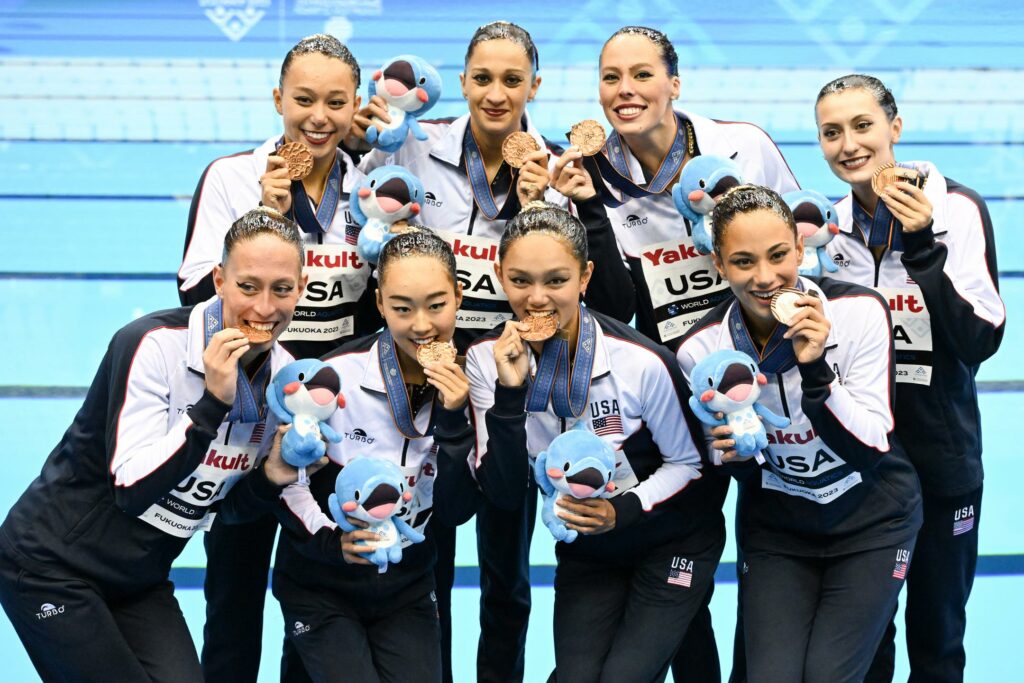
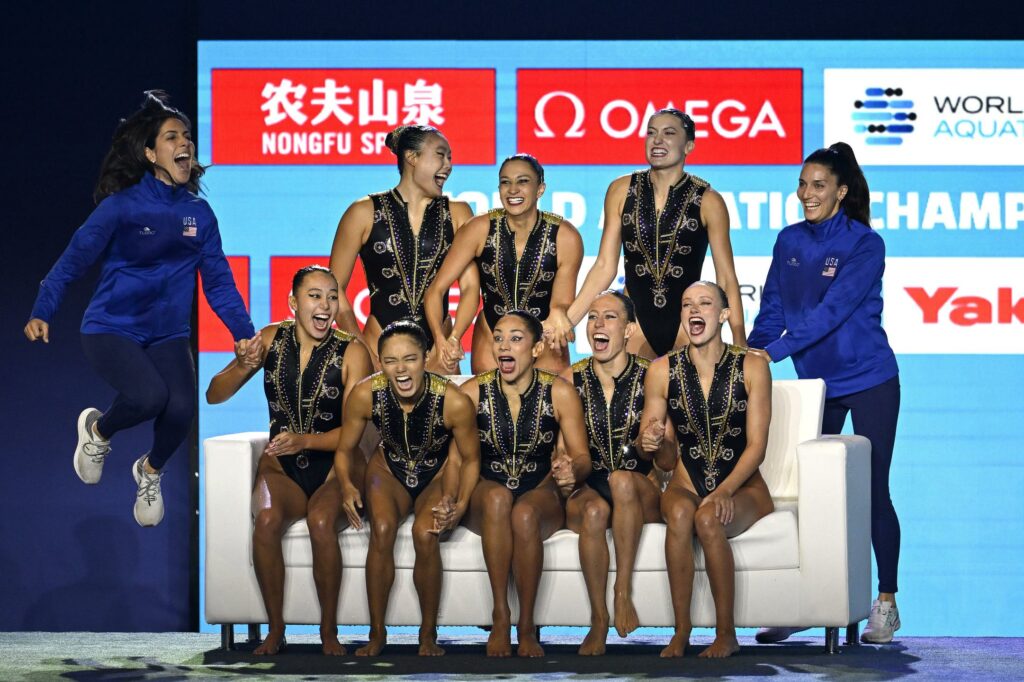
Then came the breakthrough. At the Paris Games, Ramirez helped the United States capture silver in the team event, the country’s first Olympic medal in artistic swimming since Athens 2004.
For her, the experience had felt surreal from the very beginning. Inside the Olympic Village, artistic swimmers suddenly existed alongside athletes they had grown up watching on television.
Fellow Team USA athletes also stopped them to talk about their routines. The Michael Jackson technical team choreography with the upside-down moonwalk had gone viral online. The “I Am Water”-themed free team attracted audiences far outside the artistic swimming world thanks to its Bollywood music clips.
“We came back to the Olympic Village and people were throwing confetti,” Ramirez recalled. “We were like, ‘Wait, people watched?’”
Yet even amid the attention surrounding the team, Ramirez said she never truly allowed herself to even contemplate the idea of an Olympic medal, so focused on staying present and making the most of the whole experience.
“Seriously, [The Olympics] felt like a dream,” she said. “When we got there, it was like the world had finally gotten color. Winning the medal was an amazing experience, but beyond that, I think it was amazing because I did it with the people that I loved, staff that I loved, and with my family there. It was probably the most fulfilled that I’ve ever felt.”
The weeks after Paris brought a level of visibility artistic swimming in the United States had rarely experienced. Ramirez and her teammates attended numerous events, and suddenly found themselves part of conversations that extended far beyond their sport.
“[The medal] felt really good and it was amazing to experience everything after it,” she said. “But it also made me realize that even when you get to the top in our country, it’s still not enough to gain the respect of all these other, bigger sports.
I wanted more eyes on artistic swimming. Not because I wanted respect for our medal. I just wanted people to be watching, because what we do is so cool, all the time, and so many other [countries] had such cool routines that nobody got to appreciate.”
That feeling only intensified when she saw some videos from major media outlets reducing the athletes’ Olympic performances to stereotypes or physical looks, some even mentioning “provocative deckworks.”
“I was livid,” she recalled. “We worked our whole lives to get to this moment for you to call us provocative. No way. I even made a video about it on my social media. That’s why I want people to know what the sport actually is, to really see it for what it is.”
That desire to reshape how artistic swimming is understood had already found an outlet long before Paris. Alongside her long and remarkable athletic career, Ramirez had indeed become one of artistic swimming’s most recognizable online voices.
It all happened rather unexpectedly. What began as casual videos shared on her TikTok account suddenly went viral overnight, as she was at a meet in early 2023.
“I woke up and had almost 200,000 new followers,” she said, laughing. “I was like, ‘Wait a minute. This was not supposed to be seen by anybody but my friends.’”
At a time when few artistic swimmers had a major online platform, Ramirez realized she could help introduce the sport to new audiences while also showing a more personal and relatable side of the elite world – even if that sometimes meant doing it through unconventional videos about gelatin.
“When I first started, there really wasn’t anybody in artistic swimming who was well known and advocating for the sport online,” she said. “So if that was somehow going to become me, I hoped it could be in a positive way that gets more eyes on artistic swimming. I don’t really care about being famous. I just want people to see the sport and to be curious about it. I want younger girls and boys to think, ‘Oh, that’s something I really want to do’.”
The audience Ramirez had spent years building online also grew substantially during and after the Games. As new followers discovered Team USA’s silver-medal run, many stayed for the behind-the-scenes glimpses and educational videos that had long defined her content.
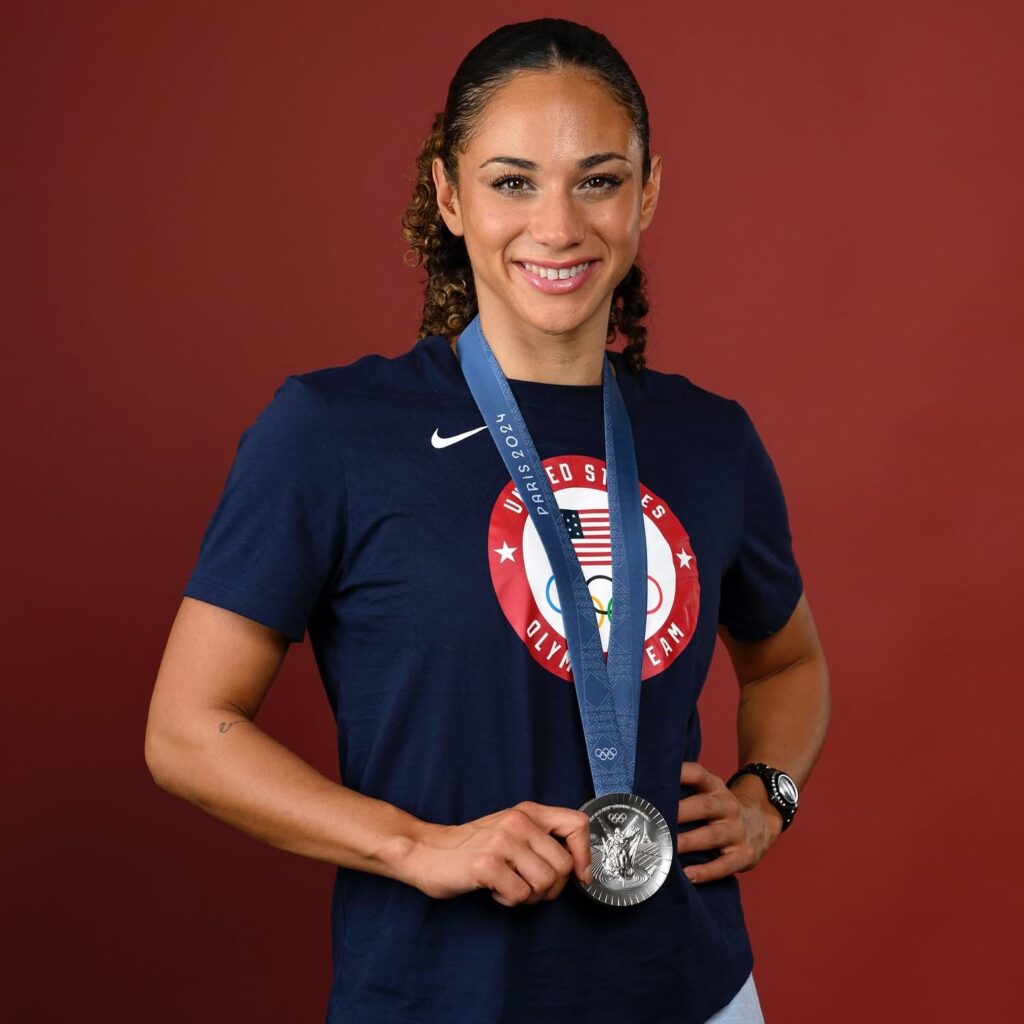
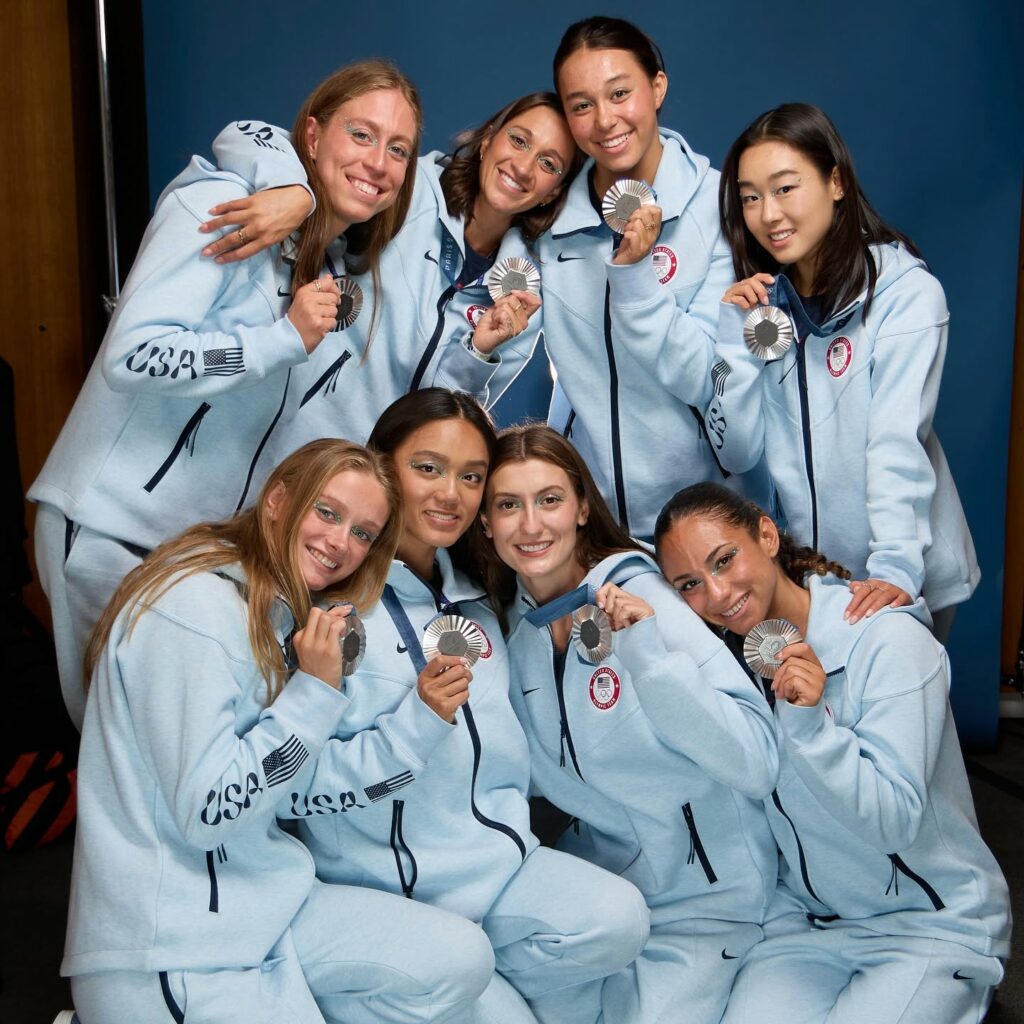
Yet while the medal brought greater visibility and a larger platform than ever before, the transition away from the Olympic spotlight proved more difficult. Like many Olympians, Ramirez experienced the stillness and emotional comedown that followed the biggest moment of her career.
At the same time, Team USA had entered yet again another period of transition. Fuentes returned home to Barcelona to take over as Spain’s national team head coach, while most of Ramirez’s Olympic teammates moved on to college programs.
Even with the team in flux and a new chapter beginning, retirement was never something she seriously considered.
“When I think about ever leaving [the sport], it’s gut-wrenching,” she said. “I won’t have the opportunity anywhere else to be tested the way I am in this sport. To be as creative as I am, as innovative, as courageous, to find ways to feel uncomfortable and overcome it. These are all the things that this sport offers. In synchro, I feel understood and seen in a way that I don’t in other places. And the family-feel you get, where you know those people through and through, that can take you through a lot of things.”
Entering a new Olympic cycle, the sport itself continued to evolve too. Following the Games, another round of rule changes and updated difficulty values reshaped the competitive landscape. As athletes and coaches adjusted, routines grew increasingly demanding, both physically and psychologically, often featuring longer underwater sequences and more complex elements.
For Ramirez, that season became one of the most challenging ones of her career as she began to struggle with mounting anxiety in the water.
A few months ago, Ramirez posted a candid and vulnerable video, where she opened up about the mental block and fears she has been dealing with since the 2025 World Championships in Singapore, where she experienced a panic attack severe enough that she had to withdraw from the technical team event.
“My nervous system was telling me, ‘Stop. Don’t do this,’” she explained. “In training when it happened, I felt that my heart rate was so spiked before I went under for even just the first hybrid that I couldn’t bring myself to do it. I developed a phobia of feeling like I was going to pass out. I would go under, only do the first pike, and I would just stop. It wasn’t even like I decided to stop. All of a sudden, I was up breathing.”
Her video quickly resonated across the artistic swimming community. Athletes from around the world commented publicly and reached out privately, many sharing that they had gone through similar experiences and felt the same concerns.
“I just wanted other people to know that they’re not alone in it,” she said. “I realized that no one was being real or honest about how scary it can be, to have someone passing out right in front of you before you have to swim, or to have this looming fear all the time. This is happening also at the top, so I just wanted others to feel seen and start a conversation.”
Since Singapore, Ramirez has slowly rebuilt her confidence with the help of sports psychologists, her new national team coaches, and her teammates. The process has been far from linear. Some days are fine, while some others may start and end in tears.
“I took a long break after [Worlds] and coming back, I have worked a lot with Megan [Abarca, head coach],” she said. “She’s really supportive. Even for just my first run-through, she told me to just go and do everything below the knee, but to just go through the routine so I know I can get through it.”
Ramirez returned to competition at the Medellin World Cup last February, helping the squad win gold in acrobatic team and silver in technical team.
“After I finished the [technical] routine and we were just sitting there, waiting for the score, I cried so much,” she recalled. “I was like, ‘Holy sh*t, I did it. I made it through.’”
Looking back, she describes a process shaped as much by vulnerability as by recovery.
“I am really just grateful for the coaches and the teammates that I do have because they’ve been so supportive and really just understanding of what happened,” she said. “Because it isn’t just me. This is something that’s happening to everybody at some level. It just so happened that my brain really, really combated me on this.”
As she tried to make sense of her own experiences, Ramirez also began looking more closely into scientific literature, and the research surrounding repeated breath-holds at high heart rates.
While it does remain limited, she said reading up on the science that does exist helped contextualize some of the physical sensations she and others experience in the water, particularly the rapid shifts between submersion and resurfacing.
More than anything, Ramirez hopes the sport can continue balancing innovation, performance and athlete welfare as it evolves, and that further scientific studies are completed to guide decision-making in the future.
“I love the sport so much,” she said. “I want to be part of it when we figure out what is the right balance, where we can combine artistry and sport integrity. The rule changes have been really good, but it’s also honestly been really tough for me to come back from a mental health issue.”
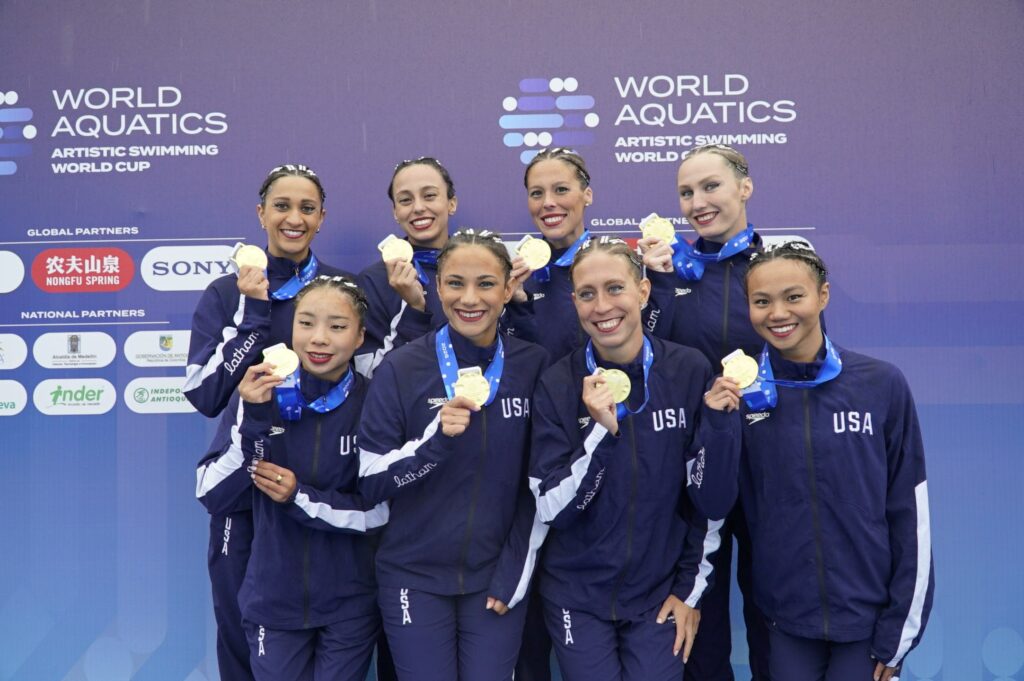
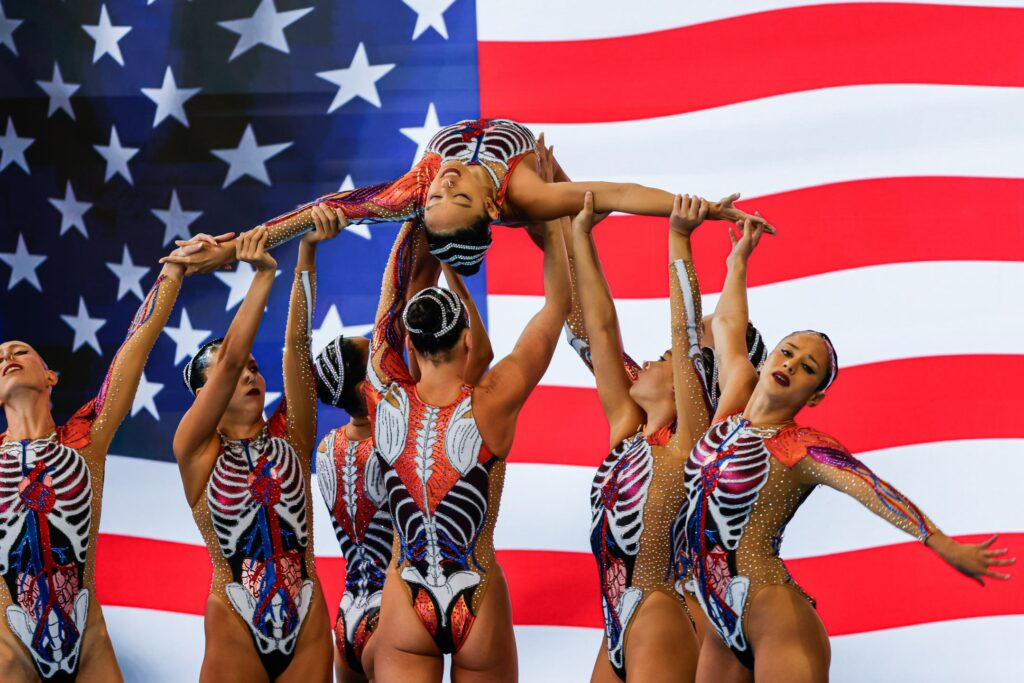
This season, as she continues navigating this ever-changing era of the sport, Ramirez says her focus has shifted inward.
“I’m having a lot of focus this year on my mental health,” she said. “Centering myself and feeling like myself again. Since the Games, my mindset has been to keep getting more comfortable, keep learning about the system, and keep striving to get better and be innovative.”
Nearing a decade on the senior national team, Ramirez was recently named to the LA28 Olympic Training Squad, and is once again preparing for another Olympic cycle – this time with a home Games waiting at the end of it.
And even after all this time and through it all, Ramirez’s ambitions have remained the same. She wants to keep having fun. She wants younger athletes to feel seen. She wants the sport to keep growing. And above all, she wants more people to understand and enjoy it.
Because somewhere between Olympic silver and 100 million-view ASMR clips, Daniella Ramirez has become exactly what artistic swimming needs most: visible.
ARTICLE BY CHRISTINA MARMET
Cover photo: USA Artistic Swimming
If you’ve enjoyed our coverage, please consider donating to Inside Synchro! Any amount helps us run the site and travel costs to cover meets during the season.